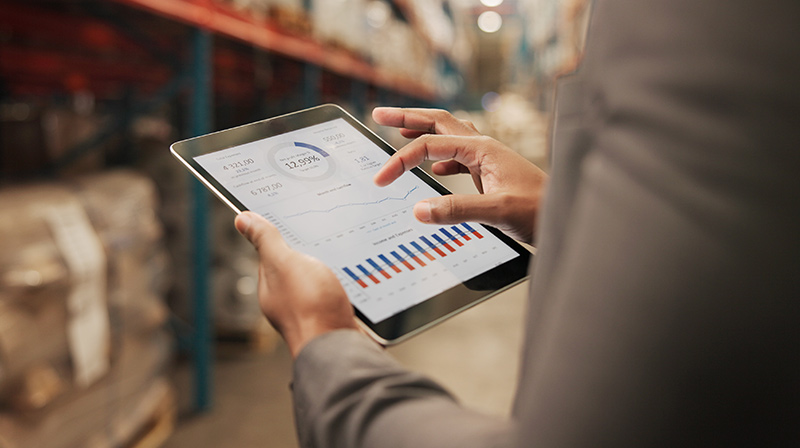
Last mile delivery has entered a new era—one where real-time visibility isn’t just a competitive advantage, but a non-negotiable operational requirement. Shippers, retailers, 3PLs, and distributors all operate in an environment where customer expectations are unforgiving:
- Accurate ETAs
- Live delivery tracking
- Instant exception alerts
- Proof-of-delivery with zero delays
But the last mile is inherently volatile. Every delivery cycle is influenced by variables far outside a dispatcher’s control—traffic congestion, local regulations, road closures, extreme weather, geospatial inconsistencies, capacity imbalance, incomplete addresses, and even hyper-local events like festivals or protests.
Traditional transportation management systems were built to respond after a disruption happens.
But today’s logistics networks demand a system that predicts the disruption before it impacts the delivery.
The Shift: From Reactive TMS to Predictive, AI-Driven Last Mile Ecosystems
Modern Smart Last Mile TMS platforms combine:
- AI models that learn delivery patterns
- IoT and telematics data from vehicles, sensors, and devices
- Dynamic route planning software
- Real-time transportation visibility platforms
- Predictive analytics that forecast delays with high accuracy
This ecosystem transforms delivery operations from manual, intuition-based decision-making to data-driven, proactive, automated workflows.
Real-Time vs. Predictive: The New Intelligence Layer
- Real-time visibility tells you what is happening right now across your fleet, your routes, and your deliveries.
- AI and predictive analytics tell you what will happen next, hours before the disruption surfaces.
This is the new backbone of last mile delivery logistics solutions, where companies using AI-enhanced visibility platforms consistently achieve:
- Lower route deviations
- Fewer delivery exceptions
- Higher SLA compliance
- Improved customer experience
- Reduced operating costs
In this landscape, the winners are not the fastest carriers—they are the ones who can see disruptions before they occur and take action instantly. That’s the promise of AI meeting real-time visibility in the last mile.
Manual planning slowing down your small business growth?
Optimize with AIWhat Is a Smart Last Mile TMS Platform? Key Features Explained
A Smart Last Mile TMS platform is far more than a routing tool—it’s an intelligent transportation management ecosystem that seamlessly unifies planning, routing, execution, visibility, compliance, and continuous optimization into one integrated digital backbone.
Unlike legacy Last Mile TMS systems that merely automate dispatching, a Smart Last Mile TMS leverages AI, real-time data, geospatial intelligence, and predictive analytics to orchestrate the entire last-mile lifecycle.
This allows logistics teams to move from fragmented workflows to a single-source-of-truth platform that continuously learns, adapts, and improves with every delivery.
Core Capabilities of a Smart Last Mile TMS
Below is a deeper, more strategic view of the capabilities that define next-generation platforms:
1. Dynamic Route Planning & Optimization
Modern route optimisation software uses AI-driven algorithms to automatically create the most efficient delivery routes based on:
- Traffic patterns
- Historic delivery behavior
- Driver skill profiles
- Vehicle constraints
- Real-time road and weather conditions
- Priority shipments or SLAs
This intelligence adds a new layer—adapting routing decisions based on hyperlocal factors such as local road networks, recurring congestion zones, seasonal disruptions, and micro-geography constraints.
2. Real-Time Tracking & End-to-End Visibility
A Smart Last Mile TMS integrates real-time transportation visibility across vehicles, drivers, packages, and stops through:
- GPS & telematics
- IoT sensors
- Scans and mobile devices
- Geofenced checkpoints
This provides unified visibility for dispatchers, fleet managers, customer service teams, and external stakeholders.
3. AI-Powered Disruption Management
AI models monitor delivery progress, detect patterns in deviations, and automatically adapt route decisions.
This includes:
- Predicting delays before they happen
- Recommending alternate routes
- Auto-adjusting ETAs
- Identifying route inefficiencies
- Triggering early exception alerts
This “self-healing logistics” capability replaces hours of manual monitoring.
4. Driver Management, Geofencing & Compliance
Platforms offer built-in tools to manage:
- Driver assignments
- Performance insights
- Safety trends
- Digital geofences for auto-triggered events
- Compliance and audit trails
Every trip becomes traceable and measurable.
5. Proof of Delivery Automation
A Last Mile TMS automates POD collection through:
- e-signatures
- Photo-based confirmation
- Barcode/QR scans
- Timestamped delivery logs
This reduces disputes, improves trust, and accelerates invoicing.
6. Real-Time Alerts & Exception Management
Exception workflows notify teams before issues escalate. Examples include:
- Missed geofence events
- Long stops
- Delivery rejections
- Traffic blockages
- Weather threats
- Non-compliant delivery patterns
AI enhances this with predictive scenarios—flagging risks before the disruption occurs.
7. Customer-Facing Visibility & Notifications
Customers receive live updates including:
- Real-time delivery tracking
- Predictive ETAs
- Status updates
- Delivery confirmations
This reduces WISMO (“Where is my order?”) calls and boosts customer satisfaction.
8. Seamless Integrations Across the Supply Chain
Smart Last Mile TMS platforms integrate easily with:
- ERP (orders, billing)
- WMS (inventory & picking)
- OMS (order orchestration)
- Carrier & 3PL systems
- eCommerce platforms
This allows data to flow across the entire order-to-delivery cycle without manual intervention.
9. Predictive Analytics for Proactive Decision-Making
The platform uses historical and real-time data to forecast:
- ETA deviations
- Delivery exceptions
- Route inefficiencies
- Demand surges
- Driver performance risks
- Operational costs
This empowers organizations to make smarter, proactive operational decisions.
Looking for smarter ways to reduce mileage and save fuel? Try AI routing
Why Smart Last Mile TMS Platforms Are Replacing Legacy Systems
Traditional TMS tools provide static routing and late visibility.
Smart platforms, however, continuously learn and evolve using AI—making them ideal for:
- High-density urban deliveries
- B2B distribution
- Healthcare logistics
- Food delivery logistics
- Retail & eCommerce last mile operations
- Furniture and large-format deliveries
- Field service & specialty logistics
Organizations adopting smart last mile delivery solutions consistently achieve:
- Better on-time performance
- Reduced costs
- Lower exceptions
- Faster delivery cycles
- Scalable operational efficiency
How AI Enhances Real-Time Tracking and Visibility
Real-time visibility is the foundation of modern last mile delivery—but its true power is unlocked only when AI is layered on top of live location, telematics, and operational data.
AI doesn’t just show what is happening; it interprets, correlates, and predicts events across the delivery network.
This transforms raw data into actionable intelligence that logistics teams can rely on to make fast, accurate, and automated decisions.
An AI-enabled Last Mile TMS becomes the nerve center of the delivery operation—processing millions of data points from:
- Vehicle telematics
- Driver mobile app metadata
- Traffic density and congestion scores
- Real-time weather feeds
- Historical lane-level performance
- Generative GEO maps and regional intelligence
- Demand patterns and seasonality
- Delivery attempt outcomes
- IoT sensors and environment-specific variables
The result: a system that not only sees the network but understands and anticipates its behavior.
How AI Supercharges Real-Time Visibility
Below is a deeper look at the AI-driven capabilities that enhance traditional visibility systems:
1. Ultra-Fast Route Deviation Detection
AI models continuously compare planned routes with live GPS signals, recognizing even micro-deviations such as:
- Incorrect turns
- Unexpected stops
- Route swaps
- Detours due to congestion or closures
Traditional systems detect deviations minutes later. AI detects them within seconds, allowing immediate corrective action.
2. Predicting Traffic Bottlenecks Before Drivers Encounter Them
Using generative geospatial intelligence, AI can forecast congestion by analyzing:
- Historic traffic flow
- Peak-hour signatures
- School zones, event hotspots, festival areas
- Weather-induced slowdowns
- Roadwork and micro-area closures
- Local driving behavior patterns
This prevents unnecessary delays and reroutes drivers to faster paths proactively.
3. Real-Time ETA Recalculation With 10x More Accuracy
Instead of static ETAs, AI generates ETAs that evolve in real time by considering:
- Driver speed patterns
- Traffic density shifts
- Route complexity
- Neighborhood accessibility
- Customer availability windows
- Weather impact
The result is significantly higher SLA compliance, customer satisfaction, and first-attempt delivery success.
4. Automatic Detection of High-Risk Deliveries
AI flags orders that show early signs of failure, such as:
- Delayed departures
- High congestion routes
- Low driver battery signals
- Historical failed attempts to the same address
- Hazardous conditions along the route
- Tight delivery windows
This allows dispatchers to intervene before the issue escalates.
5. Lane-Level Learning for Extreme Granularity
AI learns lane-level behavior—patterns that human planners can’t see, such as:
- Specific roads that consistently cause slowdowns
- Micro-geographies with poor delivery success
- Regions affected by recurring traffic patterns
- Building clusters with difficult access
This intelligence level enables hyperlocal optimization for high-density deliveries.
6. Pattern Recognition Across the Delivery Network
AI uncovers hidden relationships in data, revealing insights like:
- Repeated delays near warehouses
- Problematic zones for certain vehicle types
- Routes that consistently underperform
- Seasonal delivery slowdowns
- Neighborhoods that require alternate time windows
This empowers continuous improvement at both operational and strategic levels.
Still relying on manual checks for temperature-sensitive shipments?
Automate your cold chainFrom Monitoring to Self-Optimizing Logistics
When AI enhances real-time visibility, your last mile network evolves into a self-optimizing ecosystem.
The system doesn’t just monitor—it:
- Predicts issues
- Recommends solutions
- Learns from every delivery
- Automates decision-making
- Adapts routing based on context
- Guides drivers toward the best possible outcome in real time
The result is a next-generation last mile operation built on proactive intelligence, not reactive firefighting.
Predictive Analytics: Foreseeing Delays Before They Occur
Predictive analytics is the intelligence engine behind modern AI-powered last mile delivery platforms.
Instead of reacting to disruptions, a Smart Last Mile TMS uses machine learning, historical data, geospatial intelligence, and real-time signals to forecast delivery risk hours before it impacts operations.
This shift—from real-time visibility to predictive visibility—is what transforms last mile delivery logistics from reactive firefighting to proactive, automated decision-making.
What Predictive Analytics Can Forecast in the Last Mile
A smart Last Mile TMS continuously analyzes millions of data points to predict issues long before they surface. Here’s a deeper breakdown:
1. Traffic Slowdowns on Upcoming Route Segments
Models detect congestion patterns by analyzing:
- Live traffic feeds
- Local peak-hour trends
- Event-based disruptions
- Micro-area road closures
- Historical congestion signatures
Drivers are rerouted before entering slow zones—significantly improving ETA reliability.
2. Weather Events Impacting Delivery Zones
Weather is one of the top causes of delay in last mile operations.
AI models ingest:
- Local weather forecasts
- Storm patterns
- Visibility conditions
- Temperature fluctuations (impacting perishable goods)
- Rainfall-induced mobility slowdowns
This is especially valuable in food logistics, healthcare logistics, and temperature-sensitive deliveries.
3. Hub, Depot & Warehouse Congestion
Predictive analytics estimates delays at:
- Sorting hubs
- Loading docks
- Depots
- Pickup points
By using historical cycle times and live throughput data, the system warns dispatchers of potential bottlenecks before vehicles reach the site.
4. Driver Behavior Patterns Linked to Delays
AI identifies correlations between driver behavior and delay risk:
- Late check-ins
- Long dwell times
- Frequent deviations
- Inefficient driving patterns
- Historically slow-performing lanes
This helps in driver coaching, better assignment allocation, and performance benchmarking.
5. Potential SLA Violations
The system calculates delivery risk based on:
- Distance remaining
- Congestion forecasts
- Driver performance
- Delivery window constraints
- Real-time route disruptions
Early SLA alerts help teams take corrective measures instantly.
6. High-Failure Route Segments
AI highlights route segments that historically cause issues during:
- Specific hours
- Weekends
- Peak season
- Weather conditions
- Local events
This is amplified by intelligence, which models micro-geography risk patterns at a hyperlocal level.
7. Customer Availability Risks
Based on past interactions, the system predicts:
- Customers who often miss deliveries
- Addresses requiring extra access time
- Zones with high rejection rates
- Preferred delivery windows
This reduces failed delivery attempts and minimizes cost-per-stop.
Still relying on outdated platforms for U.S. logistics operations? Switch to AI tools
The Impact: Lower Failures, Higher Efficiency, Better Profitability
Organizations using predictive analytics consistently achieve:
- Higher On-Time Delivery (OTD)
- Fewer delivery exceptions
- Reduced delivery cost per stop
- Improved SLA compliance
- Optimized fleet performance
- Better customer satisfaction
Predictive visibility turns the last mile into a highly efficient, high-accuracy, self-correcting ecosystem.
The Role of IoT and Telematics in Smart Last Mile TMS Solutions
Real-time visibility is only as powerful as the data flowing into the system. For a Smart Last Mile TMS to deliver accurate ETAs, proactive alerts, and predictive intelligence, it needs continuous, high-quality, context-rich data from the field.
This is where IoT (Internet of Things) devices and vehicle telematics become the backbone of modern last mile operations.
IoT and telematics transform delivery fleets into connected, intelligent assets—providing real-time insights that go far beyond basic GPS tracking.
What IoT Devices Track in the Last Mile
IoT sensors feed live operational data into the Last Mile TMS, enabling deep visibility into every trip, stop, and delivery condition.
1. Exact Vehicle Location & Movement
High-frequency GPS signals provide:
- Real-time vehicle position
- Lane-level accuracy
- Speed patterns
- Trip deviations
- Unplanned stops
This is critical for high-density urban deliveries and hyperlocal routing.
2. Temperature & Environmental Conditions
Essential for pharma, food logistics, groceries, and perishable goods, IoT sensors track:
- Temperature
- Humidity
- Shock or vibration
- Cold-chain integrity
- Tamper alerts
Any deviation triggers instant alerts to prevent spoilage or compliance failures.
3. Engine Performance & Fuel Metrics
Sensors capture engine diagnostics such as:
- Fuel consumption
- Engine health
- Battery levels
- Maintenance triggers
- Vehicle utilization
Predictive maintenance significantly reduces breakdowns during delivery runs.
4. Door Open/Close Events
IoT-enabled door sensors record:
- Time of opening
- Unauthorized access
- Missed delivery attempts
- Security events
This is crucial for high-value assets, B2B freight, and controlled deliveries.
5. Driver Behavior Analytics
Telematics evaluates safety and efficiency by monitoring:
- Harsh braking
- Sudden acceleration
- Sharp turns
- Overspeeding
- Aggressive driving
- Idling patterns
These insights improve safety and reduce operational risk.
6. Idling & Stoppage Patterns
AI models use stoppage data to identify:
- Inefficient routes
- Delays at customer sites
- Fuel wastage
- Parking constraints
- Vehicle misuse
IoT ensures full transparency in driver activities and stop durations.
How Telematics Enhances Last Mile Visibility
Telematics pushes visibility from simple GPS dots to lane-level intelligence, enabling:
- Precise ETA adjustments
- Better congestion prediction
- Accelerated dispatch decisions
- Automated geofence triggers
- Hyperlocal route planning through Generative GEO insights
This transforms routing and delivery execution into a data-rich, self-learning ecosystem.
Struggling with recurring delivery delays and customer complaints?
Fix issues with analyticsWhy IoT + Telematics Are Essential for SLA-Driven Industries
Sectors requiring stringent delivery conditions rely heavily on these technologies:
- Pharmaceutical logistics (cold chain, temperature compliance)
- Grocery & food delivery logistics (freshness, spoilage prevention)
- Furniture & bulky goods (handling, route risk management)
- B2B distribution (time-window precision)
- Healthcare logistics solutions (safety and traceability)
In these environments, even small disruptions can lead to SLA violations, customer complaints, or financial losses.
IoT and telematics provide the real-time, high-fidelity data needed to ensure accuracy, safety, and operational excellence.
Dynamic Route Optimization to Avoid Disruptions
Traditional routing is static – a plan created at the start of the day that quickly becomes outdated once vehicles hit the road. But modern last mile delivery operates in a world where conditions shift minute-by-minute—traffic spikes, roadblocks appear, drivers run late, weather changes, and new orders enter the system.
This is why AI-powered dynamic routing has become a foundational capability of Smart Last Mile TMS platforms. Instead of fixed paths, routes become fluid, self-adjusting, and context-aware.
Dynamic route optimization transforms delivery execution from rigid scheduling into an adaptive, real-time decision-making engine.
How a Smart Last Mile TMS Performs Dynamic Route Optimization
A modern platform combines:
- Route optimization software
- Delivery routing software
- Real-time route optimization engines
- AI-based ETA models
These systems continuously analyze and re-evaluate routes based on actual field conditions.
Enhancing Customer Experience with Accurate ETAs and Real-Time Updates
In the era of Amazon-like expectations, customers no longer judge delivery performance only by speed—they judge it by transparency, predictability, and control. Modern consumers want to know where their order is, when it will arrive, and what to expect next. This shift has made real-time visibility and accurate ETAs essential for delivering superior last mile customer experience.
AI-enhanced ETAs allow logistics teams to move from generic delivery windows to high-precision, dynamically updated predictions across every stop in the route.
How AI Makes ETAs More Accurate
AI-powered Last Mile TMS platforms analyze a wide set of variables that influence delivery timing, including:
1. Route Complexity & Travel Patterns
AI learns how different road types, intersections, and micro-geography impact travel time.
2. Traffic Trends & Congestion Behavior
Models evaluate:
- Peak-hour traffic
- Real-time congestion
- Event-based slowdowns
- School zones and high-density areas
3. Historical Delivery Behavior
AI identifies recurring patterns such as:
- Stops that typically take longer
- Buildings requiring additional access time
- Regions with common delivery failures
4. Driver Performance & Driving Style
ETAs adjust based on:
- Average driving speed
- Dwell time tendencies
- Efficiency in specific neighborhoods
- Adherence to route recommendations
5. Real-Time Environmental Conditions
Considers:
- Weather
- Road closures
- Construction
- Accidents
- Sudden delays affecting travel flow
This enhances by mapping micro-geography behaviors, allowing ETAs to reflect hyperlocal realities with high accuracy.
Still relying on manual updates and guesswork for freight status? Move to real-time dataCase Studies: How Businesses Gain Real Value from AI-Driven Last Mile TMS Platforms
Smart Last Mile TMS platforms powered by AI, predictive analytics, IoT, and dynamic route optimization are no longer “nice-to-have”—they’re driving measurable ROI across industries. Below are real-world examples showing how companies transform last mile delivery performance by adopting intelligent route optimisation software and real time transportation visibility platforms.
1. Retail Distribution: Cutting Delays with Predictive Decisioning
A national retail distribution network faced inconsistent delivery times, frequent SLA breaches, and limited end-to-end visibility across urban and semi-urban zones.
Solution Used:
- Real-time visibility platform
- Dynamic route planning software
- Predictive analytics for traffic & congestion patterns
AI-Driven Impact:
- 28% reduction in delivery delays through early detection of congestion hotspots
- Improved route planning accuracy, especially during peak hours
- Smoother zone-level distribution using automated rebalancing
Retailers use AI-powered Last Mile Delivery Solutions to detect upcoming disruptions and automatically reroute drivers, improving on-time delivery (OTD) and reducing operational costs.
2. Healthcare & Pharma: Protecting Cold-Chain Integrity with IoT + AI
A national pharma distributor struggled with maintaining temperature integrity for vaccines and critical medications while ensuring full compliance with strict SLAs.
Solution Used:
- IoT temperature and humidity sensors
- Telematics-based fleet monitoring
- AI alerts for cold-chain deviations
AI-Driven Impact:
- 95% improvement in cold-chain compliance
- Real-time alerts prevented spoilage and repeat dispatches
- Automated compliance logs simplified audits and quality documentation
IoT-enabled Last Mile Logistics Software helps pharma companies maintain uninterrupted cold-chain conditions, ensuring safety, compliance, and zero-excuse delivery performance.
3. Furniture, Appliances & Big & Bulky Deliveries: Improving ETA Precision
Big & bulky deliveries such as furniture, appliances, and home installations often suffer from unpredictable delivery windows and high reattempt costs.
Solution Used:
- AI-driven ETA prediction engine
- Delivery route planning software
- Real-time customer notifications + ePOD
AI-Driven Impact:
- 40% improvement in ETA accuracy
- 25% reduction in failed delivery attempts due to precise time windows
- Higher customer satisfaction with map-based live tracking and proactive updates
Large-format retailers use AI routing optimization software to predict accurate ETAs, reduce delivery failures, and enhance customer experience through transparent real-time updates.
Conclusion: Embracing Smart Last Mile TMS for a Competitive Edge
In today’s fast-paced delivery landscape, every minute counts. Businesses that can anticipate disruptions, adapt on the fly, and maintain precise delivery performance gain a significant competitive advantage. AI-driven last mile visibility and predictive intelligence are no longer optional—they are the backbone of operational excellence.
By adopting a Smart Last Mile TMS, organizations can:
- Predict delays before they happen with AI-powered predictive analytics
- Optimize routes dynamically based on real-time traffic, weather, and micro-geography intelligence
- Monitor fleet and driver performance continuously through IoT and telematics
- Enhance customer experience with accurate ETAs, live tracking, and proactive notifications
- Automate exception management to minimize disruptions and maintain SLA compliance
These capabilities reduce costs, improve reliability, and boost customer satisfaction, creating a measurable impact across retail, eCommerce, B2B distribution, healthcare logistics, and other high-density delivery operations.
The logistics leaders of tomorrow are investing in:
- Real-time visibility platforms
- Dynamic route planning and optimization software
- AI-driven predictive analytics engines
- IoT-enabled fleet insights
- Generative GEO intelligence for hyperlocal optimization
By embracing these technologies, businesses transform their last mile operations from reactive and fragmented to proactive, intelligent, and scalable, ensuring they stay ahead in a competitive, customer-centric market.