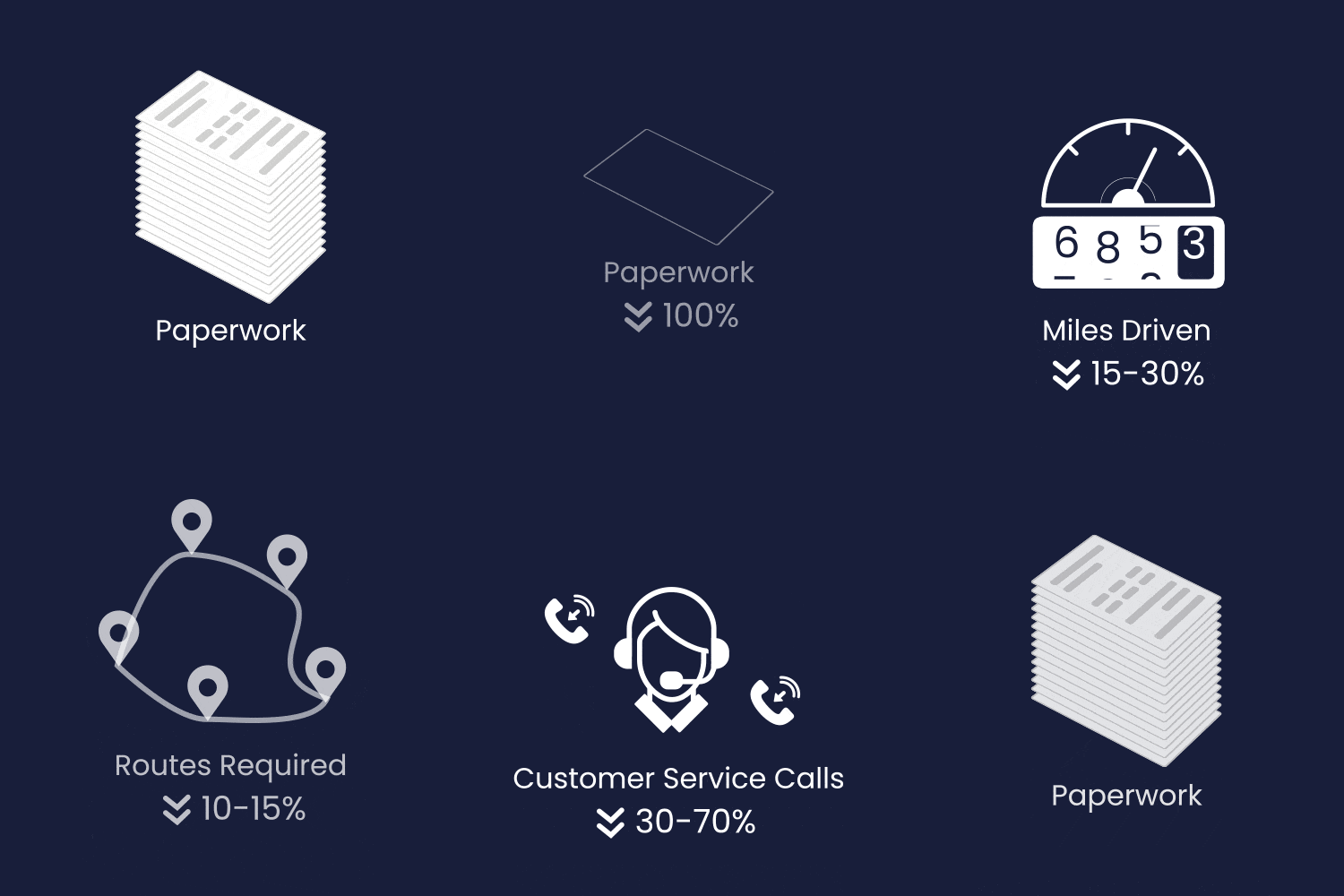
For years, advanced logistics technology was considered a luxury—something only large enterprises and global 3PL providers could afford. But 2026 marks a major shift. With AI becoming more accessible, cloud infrastructure getting cheaper, and modern logistics platforms offering pay-as-you-grow models, small and mid-sized businesses (SMBs) are now rapidly adopting AI-powered logistics software to streamline operations and stay competitive.
Today’s small businesses face enterprise-level challenges:
- unpredictable delivery demand and seasonal fluctuations
- continuously rising fuel and transportation costs
- driver shortages and increasing labor pressure
- growing customer expectations for faster, accurate, real-time delivery updates
the operational complexity of last-mile logistics and multi-stop routing
The challenge is that SMBs must juggle all of this with limited teams, tighter budgets, and minimal operational buffers. That’s exactly why AI-driven logistics optimization has emerged as a game changer.
Unlike traditional logistics management software that relies on static rules and manual inputs, AI-powered logistics platforms learn from real-world data—traffic behavior, delivery patterns, weather conditions, driver performance, fuel usage, customer locations, and more. This lets them predict issues before they occur, optimize routes automatically, reduce operational costs, and deliver a level of efficiency that previously required large teams and expensive systems.
Whether you’re managing a small fleet, running a growing eCommerce brand, operating a regional distribution network, or offering final-mile delivery services, AI logistics technology levels the playing field. It gives small businesses access to the same advanced capabilities used by major logistics players—without the complexity or cost barrier.
As we move deeper into 2026, AI-powered logistics software is no longer just a competitive advantage…
It’s becoming essential for survival.
What Is AI-Powered Logistics Software? Key Features Explained
AI-powered logistics software is an intelligent platform that uses machine learning, predictive analytics, automation, and real-time data processing to streamline and optimize logistics operations across the entire supply chain. Unlike traditional logistics management software that relies heavily on manual inputs or static routing rules, AI systems continuously learn from patterns — traffic updates, delivery behavior, fuel usage, fleet performance, customer locations, and seasonal demand — to make smarter decisions.
For SMBs, retailers, distributors, and even fast-growing 3PL providers, this technology acts like a digital logistics co-pilot. It analyzes millions of data points in seconds, automates repetitive tasks, and delivers precise recommendations that human teams simply can’t replicate at scale. The result: fewer errors, faster deliveries, lower operating costs, and a more resilient logistics network.
Core Capabilities of AI-Powered Logistics Software
1. Intelligent Route Optimization
One of the biggest advantages of AI-powered logistics software is its ability to generate highly efficient delivery routes automatically. Instead of relying on manual planning or fixed routing rules, the AI analyzes thousands of variables simultaneously to determine the fastest, lowest-cost, and most reliable paths for every delivery.
AI evaluates factors such as:
- Real-time traffic conditions — accidents, road closures, congestion patterns
- Weather data — rain, storms, heat waves, or visibility issues that can impact ETAs
- Delivery time windows — customer preferences, service-level agreements, cut-off times
- Driver availability & skillset — who is nearby, who has capacity, who knows the route
- Vehicle type & capacity — weight limits, load distribution, specialty requirements
- Delivery density & geography — cluster-based optimization for high-volume zones
By combining these inputs, the system builds routes that minimize fuel usage, distance traveled, idle time, and delivery delays — something traditional routing software or manual planners simply cannot match in accuracy.
For SMBs, 3PL providers, and last-mile delivery companies, this means:
- Fewer failed or late deliveries
- More orders handled per driver
- Reduced fuel and operational costs
- Higher productivity with the same fleet
- Better customer satisfaction due to precise ETAs
In short, AI eliminates the guesswork from route planning and transforms it into a data-driven, fully automated process—giving small businesses the efficiency of large logistics enterprises.
2. Automated Dispatching
AI-powered automated dispatching takes the complexity out of fleet coordination by intelligently assigning the right driver, the right vehicle, and the optimal sequence of stops — all without manual intervention. Instead of dispatchers juggling spreadsheets, phone calls, and last-minute changes, AI evaluates real-time operational data to make instant, accurate decisions.
AI considers:
- Driver proximity and availability
- Driver expertise or service region familiarity
- Vehicle capacity, load type, and special requirements
- Delivery priority levels and service windows
- Traffic, live order volume, and expected delays
By processing all of this in seconds, the system automatically generates a dispatch plan that maximizes fleet utilization and minimizes downtime.
For SMBs and growing 3PL providers, automated dispatching leads to:
- Faster job assignment — no waiting for a dispatcher to manually plan
- Better load balancing — reducing overworked drivers and underutilized vehicles
- Lower cost per delivery through optimized resource allocation
- More predictable SLAs and on-time delivery performance
- Reduced manual errors, especially during peak or high-volume days
Ultimately, AI-powered dispatching ensures every delivery run operates at peak efficiency — even when order volumes change unexpectedly. It gives small teams the power to run logistics operations like a mature enterprise without adding more staff or complexity.
3. Real-Time Visibility
In modern final mile logistics, real-time visibility is no longer optional — it’s a competitive advantage. AI-powered logistics software provides end-to-end tracking of shipments, drivers, vehicles, ETAs, and delivery exceptions, giving small businesses the same operational intelligence that large enterprises rely on.
With real-time visibility, operations teams can monitor:
- Live driver locations
- Accurate, automatically updated ETAs
- Delivery status and proof of delivery (POD)
- Route deviations or delays
- Traffic or weather disruptions impacting the route
- Order-level exceptions, such as failed deliveries or customer unavailability
The AI continuously analyzes data from GPS, telematics, driver apps, and order systems, predicting potential issues before they affect customers.
Why This Matters for SMBs and Final Mile Providers
- Fewer customer support calls because customers receive precise delivery updates
- Improved SLA compliance with real-time alerts and faster problem resolution
- Instant issue detection (missed stops, breakdowns, delays, wrong addresses)
- Better operational control during peak demand or high-density delivery windows
- Higher customer satisfaction through transparency and reliable ETAs
For last-mile delivery, where every minute and every mile matters, real-time visibility transforms chaos into control. It helps teams react instantly, optimize in motion, and ensure customers always know exactly when their order will arrive.
4. Predictive Demand & Capacity Planning
One of the most powerful advantages of AI-powered logistics software is its ability to forecast demand and plan capacity with precision. Instead of guessing future order volumes or scrambling for drivers during sudden spikes, AI uses historical patterns, seasonality, customer behavior, and real-time industry signals to accurately forecast what’s coming next.
AI analyzes:
- Historical delivery volumes and seasonal trends
- Customer ordering frequency and location density
- Peak-hour patterns and regional demand cycles
- Inventory availability and replenishment timelines
- Driver staffing trends and resource limitations
- External factors like holidays, weather, or promo campaigns
Using this data, the system predicts future delivery loads days or even weeks in advance, helping small businesses avoid both under-allocation and over-allocation of resources.
Why This Matters for SMBs and Growing 3PL Providers
- Eliminate last-minute chaos by knowing exactly how many drivers, vehicles, or shifts you’ll need.
- Reduce operational costs by avoiding unnecessary overtime or overstaffing.
- Improve SLA performance through better planning and load balancing.
- Stay prepared for seasonal spikes, eCommerce sale days, or B2B restocking surges.
- Enable smarter inventory positioning for faster final-mile delivery.
For small fleets and regional logistics providers, predictive planning ensures they never fall behind demand — even with limited resources. It empowers SMBs to operate with enterprise-level foresight, turning uncertainty into strategic advantage.
5. Smart Exception Management
In logistics — especially final mile delivery — exceptions are inevitable. What matters is how quickly teams detect and resolve them. AI-powered logistics software transforms exception management from a reactive process into a proactive, automated system.
AI continuously monitors every delivery run and uses predictive analytics to identify issues before they disrupt operations. Instead of discovering problems at the end of the day, teams receive instant alerts that help them take corrective actions in real time.
AI automatically detects:
- Delayed orders
– Caused by traffic, driver delays, or inaccurate time windows - Failed or at-risk deliveries
– Due to customer unavailability, address issues, or access restrictions - Route bottlenecks
– Congestion patterns, road closures, or inefficient stop sequences - High-risk shipments
– Fragile items, perishable loads, or time-sensitive deliveries
Once detected, the system sends smart alerts to operations teams, dispatchers, and drivers, allowing them to quickly reroute, reschedule, or escalate issues.
Why This Matters for Small Businesses & 3PL Providers
- Faster issue resolution with automated alerts
- Higher on-time delivery rates and SLA compliance
- Reduced operational firefighting during peak hours
- Lower customer complaints through proactive communication
- Better resource allocation by focusing teams where they’re needed
Smart exception management gives small businesses the situational awareness of a large logistics operation — without the overhead, complexity, or additional staffing.
6. Automated Customer Communication
In an era where customers expect Amazon-level delivery transparency, automated communication has become a must-have for small businesses. AI-powered logistics software elevates the delivery experience by sending accurate, timely, and context-aware updates throughout the delivery journey — without requiring any manual effort from the operations team.
AI enhances customer communication through:
✔ Precise ETA Notifications
AI calculates hyper-accurate ETAs using real-time traffic, driver movement, route changes, and order priority.
Customers know exactly when their package will arrive — reducing frustration and support inquiries.
✔ Real-Time Order Tracking
Customers can track their orders live on a map, just like major parcel carriers.
This improves trust, transparency, and overall satisfaction, especially in final mile delivery scenarios.
✔ Automated Delay Alerts
If a delay is predicted due to traffic, weather, or an unexpected route deviation, the system instantly sends an update.
This proactive communication significantly reduces failed deliveries and negative customer feedback.
Why This Matters for SMBs
Small businesses often lack the manpower or tools to manually update customers.
AI changes that.
- No more manual phone calls
- No missed customer updates
- Fewer “Where is my order?” inquiries
- Higher customer satisfaction with zero extra work
In short, AI-powered customer communication gives SMBs enterprise-grade capabilities — without enterprise-level costs or complexity. It creates a smooth, transparent delivery experience that builds trust and helps businesses compete with much larger players.
Automation is reshaping cold chain logistics—stay ahead of delays and inefficiencies.
Explore Automated SolutionsTop Benefits of AI Logistics Solutions for Small Businesses
In today’s fast-paced logistics environment, small businesses face the same delivery challenges as large enterprises — rising fuel costs, unpredictable demand, labor shortages, and increasing customer expectations. AI-powered logistics software offers a smart solution by automating route planning, dispatching, tracking, and reporting. These platforms not only streamline operations but also provide actionable insights that improve efficiency, reduce costs, and enhance the overall customer experience. By leveraging AI, small and mid-sized businesses can compete with larger players, scale faster, and make data-driven decisions that directly impact their bottom line.
1. Lower Operational Costs
One of the most immediate and measurable benefits of AI-powered logistics software for SMBs and 3PL providers is the reduction of operational costs. By automating routing, dispatch, and exception management, AI minimizes wasteful spending across multiple areas of logistics.
AI reduces:
- Route miles by calculating the most efficient paths based on real-time traffic, vehicle capacity, and delivery clusters
- Fuel usage through optimized routing and reduced idle time
- Driver overtime by improving scheduling and workload distribution
- Failed or missed deliveries by predicting high-risk stops and rerouting proactively
- Manual planning mistakes that often occur when juggling spreadsheets or static routing tools
Even a 10–20% improvement in route efficiency can dramatically improve profit margins, especially for small fleets or growing businesses where resources are limited. Over time, AI’s predictive capabilities also help reduce vehicle maintenance costs, overtime pay, and administrative overhead — giving SMBs the financial agility to compete with larger logistics providers.
By investing in AI-driven logistics optimization, small businesses can achieve enterprise-level efficiency at a fraction of the cost, turning a previously labor-intensive process into a data-driven, cost-saving advantage.
2. Faster, More Reliable Deliveries
In today’s eCommerce-driven market, customers expect quick, predictable, and transparent deliveries. Small businesses that fail to meet these expectations risk losing orders to larger competitors like Amazon, Flipkart, or other regional logistics providers. AI-powered logistics software addresses this challenge by optimizing every aspect of the delivery process to ensure faster and more reliable fulfillment.
With AI, small businesses can:
- Generate accurate ETAs by analyzing real-time traffic, route conditions, and delivery stop sequences
- Automate dispatching so the right driver handles the right delivery at the right time
- Predict and avoid delays caused by weather, traffic, or high-volume periods
- Reduce failed or missed deliveries, improving overall delivery success rates
The result is shorter delivery times, consistent on-time performance, and happier customers, without adding extra staff or fleet resources. For SMBs and 3PL providers, this means they can compete with enterprise-level logistics operations, offering the same reliability and speed that customers have come to expect from major players.
3. Better Control Over Final Mile Logistics
The final mile is the most complex and expensive part of the delivery process, accounting for up to 53% of total logistics costs. For small businesses, managing this stage efficiently can mean the difference between profitability and loss. AI-powered logistics software gives SMBs unprecedented control over last-mile operations, turning what was once a high-risk, resource-intensive process into a streamlined, predictable workflow.
With AI, small businesses can:
- Reduce last-mile delivery errors by automatically optimizing routes, managing driver workloads, and predicting problem stops
- Predict delays using real-time traffic, weather data, and delivery density insights
- Improve driver productivity by assigning the right stops to the right drivers and eliminating idle or redundant time
- Enhance customer experience with precise ETAs, live tracking, and proactive communication
By leveraging AI for final-mile logistics, SMBs gain the operational intelligence of large logistics providers without the enterprise-level cost. This reduces overhead, improves service reliability, and builds customer trust, allowing small businesses to compete effectively in an increasingly demanding delivery landscape.
4. Reduced Manual Workload
For many small businesses, logistics teams spend hours every day on repetitive tasks — planning routes, coordinating drivers, updating spreadsheets, and tracking deliveries. This manual work not only drains time and resources but also increases the risk of errors, missed deliveries, and operational inefficiencies.
AI-powered logistics software automates these repetitive tasks, giving teams more time to focus on strategic growth, customer service, and business development.
With AI automation, small businesses can:
- Automatically plan optimal routes for multiple vehicles and stops
- Dispatch drivers intelligently based on capacity, location, and delivery priority
- Track shipments and exceptions in real time, eliminating manual monitoring
- Generate reports and insights automatically, without time-consuming data entry
By reducing manual workload, AI empowers SMBs to operate leaner, faster, and smarter, while improving employee productivity and satisfaction. It transforms logistics from a time-intensive burden into a scalable, high-efficiency operation that supports growth and customer satisfaction.
5. Scalable for Growing Businesses
Growth is exciting, but for small businesses, it often comes with operational headaches. As order volumes increase, manual logistics processes quickly become a bottleneck, requiring more planners, dispatchers, and administrative staff. AI-powered logistics software solves this challenge by scaling automatically, allowing businesses to handle higher volumes without proportional increases in overhead.
With AI-driven scalability, SMBs can:
- Handle more deliveries without adding staff, thanks to automated routing, dispatch, and tracking
- Maintain high service levels even during peak seasons or promotional campaigns
- Easily integrate new drivers, vehicles, or routes into the system without disruption
- Adapt dynamically to changing order patterns, reducing the risk of missed deliveries or delays
This scalability ensures that small and mid-sized businesses can grow confidently, compete with larger logistics providers, and maintain customer satisfaction — all while keeping operational costs under control.
6. Improved Decision-Making
For small businesses, logistics data is often scattered across spreadsheets, GPS trackers, and order management systems, making it difficult to extract actionable insights. AI-powered logistics software changes this by converting raw data into clear, actionable intelligence that drives smarter decisions across the supply chain.
With AI, SMBs gain insights on:
- Delivery trends — understanding peak hours, high-density areas, and seasonal spikes
- Repeat delay patterns — identifying problem routes, bottlenecks, or recurring operational issues
- Cost-per-mile analysis — evaluating efficiency across vehicles, drivers, and routes
- Driver performance metrics — tracking productivity, reliability, and compliance
These insights provide the level of operational clarity that was once only available to large enterprises, allowing SMBs to optimize fleet utilization, reduce costs, and improve customer satisfaction. By leveraging AI-driven analytics, small businesses can make proactive, data-backed decisions, ensuring every logistics choice contributes to growth and efficiency.
Stay ahead in the competitive US logistics market by leveraging AI insights.
Upgrade Your LogisticsChoosing the Right AI Logistics Software for Your Small Business
Not all AI logistics platforms are created equal — and many are designed with large enterprises in mind, making them complex, expensive, or difficult to implement for small businesses. Choosing the right solution is critical for maximizing efficiency, reducing costs, and improving delivery performance without overwhelming your team.
When evaluating an AI logistics platform, SMBs should focus on:
1. True AI Capabilities
Not all logistics platforms that claim to use AI deliver real, actionable intelligence. For small businesses, it’s critical to ensure that the software provides genuine AI-driven functionality rather than simple rule-based automation.
When evaluating a solution, verify that it includes features such as:
- Predictive Routing — AI automatically generates the most efficient routes by analyzing traffic, delivery density, and time windows.
- Machine-Learning-Based Forecasting — Predicts order volumes, staffing needs, and potential delays for proactive planning.
- Automated Dispatch — Assigns the right driver, vehicle, and sequence of stops to maximize efficiency.
- Real-Time Optimization — Continuously adjusts routes and schedules based on live data, such as traffic changes, weather, and unexpected delays.
Ensuring that your platform has true AI capabilities allows your small business to reduce operational costs, increase delivery accuracy, and improve customer satisfaction, giving you a competitive advantage over both local competitors and larger enterprise players.
2. Mobile-First Functionality
In today’s fast-paced delivery environment, drivers rely heavily on smartphones and mobile devices to manage routes, track shipments, and communicate updates. For SMBs and regional 3PL providers, a logistics platform must be mobile-first, providing drivers with the tools they need to perform efficiently while keeping operations transparent and real-time.
A robust mobile-first solution should include:
- Strong Driver Mobile App — Intuitive, easy-to-use interface for managing stops, routes, and delivery confirmations.
- Digital Proof of Delivery (POD) — Captures signatures, photos, or QR codes instantly, eliminating paper forms and reducing errors.
- Barcode & QR Code Scanning — Streamlines package handling, ensures accuracy, and speeds up delivery workflows.
- Real-Time Updates — Automatically syncs driver status, location, and delivery progress with operations teams and customers.
With mobile-first functionality, small businesses can empower drivers, reduce manual work, and provide customers with live, transparent updates, all without investing in expensive hardware. This capability ensures smooth last-mile operations, enhances productivity, and supports scalable, reliable deliveries as your business grows.
3. Cloud-Based, Easy Deployment
Small businesses often lack the IT resources and infrastructure to implement complex logistics systems. That’s why cloud-based logistics software is ideal for SMBs: it works out of the box, requires no on-site servers, and can scale affordably as your business grows.
Key considerations for cloud-based deployment include:
- Works Out of the Box — Minimal setup time and pre-configured workflows allow teams to start using the platform quickly.
- Zero Infrastructure Requirements — No need for servers, VPNs, or additional hardware; all updates and maintenance happen automatically in the cloud.
- Affordable Scalability — Flexible subscription or pay-as-you-grow models let small businesses expand usage without significant capital investment.
By choosing a cloud-based solution, SMBs can implement AI-powered logistics software quickly, reduce IT overhead, and scale operations seamlessly as order volumes and fleet size grow. This ensures small businesses get enterprise-level capabilities without the enterprise-level complexity or cost.
4. Real-Time Visibility
For small businesses and 3PL providers, having real-time visibility into every delivery is crucial for managing operations efficiently and keeping customers informed. In local deliveries and high-density routes, delays or missed stops can quickly escalate costs and damage customer trust. AI-powered logistics software provides a centralized view of all shipments, drivers, and routes, giving teams the insight they need to act proactively.
Key benefits include:
- Live Driver and Vehicle Tracking — Know the exact location of every delivery in real time.
- Instant ETA Updates — Automatically adjust estimated arrival times based on traffic, route changes, or driver progress.
- Early Exception Detection — Identify potential delays or missed stops before they impact customers.
- Customer Transparency — Share live tracking links and notifications to improve the delivery experience.
With real-time visibility, SMBs and local 3PL providers can reduce operational errors, improve on-time delivery rates, and respond quickly to unexpected issues, all while providing a professional, reliable experience that rivals larger logistics companies.
5. Final Mile Logistics Support
The final mile is the most critical and cost-intensive part of any delivery operation, often accounting for more than half of total logistics expenses. For small businesses and local 3PL providers, having dedicated final mile logistics support in your AI-powered software ensures that every delivery is executed efficiently, accurately, and on time.
When evaluating a platform, SMBs should look for features such as:
- Optimized Multi-Stop Routes — AI calculates the most efficient sequence of stops, reducing travel time, fuel consumption, and delivery delays.
- Automated Customer Communication — Sends real-time ETAs, delay alerts, and delivery confirmations to enhance customer experience.
- Accurate Delivery ETAs — Dynamic, data-driven estimates that account for traffic, weather, and delivery density.
- Exception Alerts — Proactively flags failed deliveries, route deviations, or other operational issues so teams can act immediately.
By leveraging these features, small businesses can streamline final mile operations, reduce costs, and improve customer satisfaction, achieving enterprise-level logistics efficiency without the enterprise-level overhead.
6. Transparent Pricing
Small businesses often operate on tight budgets, making cost predictability essential when investing in AI-powered logistics software. A platform with transparent, subscription-based pricing allows SMBs to plan expenses accurately, avoid unexpected fees, and scale usage without financial risk.
Key features of transparent pricing include:
- Predictable Subscription Model — Monthly or annual plans with clear inclusions and no hidden charges.
- Pay-As-You-Grow Flexibility — Scale the platform as your order volume or fleet size increases without paying for unused features.
- Cost Clarity Across Modules — Understand the pricing for route optimization, automated dispatch, tracking, and analytics upfront.
- Reduced Financial Risk — Avoid unexpected implementation fees, infrastructure costs, or expensive add-ons.
By prioritizing transparent pricing, small businesses can access enterprise-grade logistics capabilities while keeping costs manageable, ensuring that the investment in AI-powered software delivers measurable ROI from day one.
7. Integration Readiness
For small businesses and regional 3PL providers, logistics operations rarely exist in isolation. To maximize efficiency, AI-powered logistics software must seamlessly integrate with existing business systems — from ERP and order management tools to eCommerce platforms. Platforms with robust integration capabilities save time, reduce errors, and create a connected, automated supply chain.
Key aspects of integration readiness include:
- ERP Integration — Sync inventory, billing, and reporting automatically to reduce manual reconciliation.
- eCommerce Platform Connectivity — Import orders in real time from Shopify, WooCommerce, Magento, or other platforms for faster fulfillment.
- Order Management Systems (OMS) — Ensure order status, delivery updates, and exceptions flow seamlessly across all systems.
API-First Architecture — Platforms like nuVizz enable easy integration with third-party solutions, allowing SMBs to expand capabilities without IT complexity.
With integration-ready software, small businesses can connect their operations end-to-end, automate workflows, and maintain visibility across all channels. This ensures accurate data, faster delivery, and better decision-making, giving SMBs enterprise-grade logistics efficiency without the enterprise-level complexity.
Struggling with route delays and operational inefficiencies? See how AI supercharges TMS performance. Discover AI-Powered TMS
How to Get Started with AI Logistics Software: A Small Business Guide
Adopting AI-powered logistics software doesn’t have to be complicated or expensive. With the right approach, small businesses can implement advanced tools quickly, streamline operations, and see measurable results. Here’s a practical roadmap SMBs can follow to get started:
Step 1: Identify Your Pain Points
Before adopting AI-powered logistics software, small businesses need to clearly understand their current operational challenges. Identifying pain points helps ensure that the AI solution you choose delivers measurable improvements and ROI.
Typical challenges faced by SMBs include:
- High Delivery Costs — Fuel expenses, vehicle maintenance, and overtime pay can quickly eat into margins.
- Poor Driver Visibility — Without real-time tracking, managers struggle to monitor routes, predict delays, or optimize performance.
- Manual Scheduling — Planning routes and assigning deliveries manually is time-consuming and prone to errors.
- Unpredictable Delays — Traffic, weather, or last-minute order changes can disrupt schedules and affect customer satisfaction.
By documenting these pain points, SMBs can target the areas where AI-driven logistics software will have the greatest impact, such as reducing costs, improving delivery reliability, and automating repetitive tasks. This first step ensures that the adoption process is strategic, focused, and aligned with business goals.
Step 2: Start with a Pilot
Implementing AI-powered logistics software doesn’t have to happen all at once. For small businesses, a pilot program is the best way to test the technology, understand its benefits, and build confidence in adoption.
A successful pilot involves:
- One Team — Select a single operations team or fleet to test the platform, ensuring focused feedback and manageable implementation.
- One Region — Start in a limited delivery area to monitor results closely without overwhelming your resources.
- One Product Line — Begin with a single category of orders or services to measure improvements accurately.
During the pilot, track key performance indicators such as:
- Reduction in delivery costs — Fuel, overtime, and route efficiency improvements
- Improved delivery times — Faster, more reliable routes and accurate ETAs
- Operational efficiency gains — Less manual scheduling, fewer errors, and smoother driver coordination
Running a small-scale pilot allows SMBs to evaluate ROI, identify optimization opportunities, and adjust processes before scaling AI logistics software across the entire business. This controlled approach reduces risk while demonstrating tangible benefits quickly.
Step 3: Train Teams for Adoption
Even the most advanced AI-powered logistics software will not deliver its full potential without proper team adoption. Small businesses must ensure that drivers, dispatchers, and customer support staff are comfortable using the platform to maximize efficiency, accuracy, and customer satisfaction.
Key steps for effective training include:
- Drivers — Teach route navigation, live tracking, digital proof of delivery (POD), and how to handle exceptions.
- Dispatchers — Demonstrate how to monitor live routes, manage automated dispatch, and respond to alerts or delays.
- Customer Support Staff — Show how to access real-time delivery updates, respond to customer queries, and communicate ETA changes efficiently.
Modern AI logistics platforms are designed to be user-friendly and intuitive, meaning training can often be completed in short sessions without the need for complex IT support.
Proper training ensures that your team adopts the system confidently, reducing errors, improving operational efficiency, and unlocking the full benefits of AI-driven logistics for your small business.
Step 4: Scale Gradually
Once your pilot program proves successful and your team is comfortable using AI-powered logistics software, it’s time to scale gradually. Small businesses can expand AI adoption step by step, minimizing risk while maximizing operational impact.
Gradual scaling involves:
- More Routes — Extend AI route optimization to additional delivery zones or regions, ensuring consistent efficiency across your network.
- More Drivers — Integrate additional drivers into the platform, leveraging automated dispatch, real-time tracking, and performance insights.
- More Hubs or Warehouses — Connect multiple locations for centralized visibility, inventory tracking, and cross-hub delivery planning.
Scaling gradually allows SMBs to maintain control over operations, monitor performance improvements, and optimize AI configuration for each new route, team, or hub. Over time, this approach ensures that your business can handle higher volumes, reduce costs, and improve customer satisfaction, all while retaining the flexibility and agility that small businesses need.
Step 5: Track Metrics Continuously
Implementing AI-powered logistics software is only the first step — continuous monitoring of key performance indicators (KPIs) ensures that small businesses maximize efficiency, reduce costs, and improve service quality over time.
Important KPIs to track include:
- Cost per Delivery — Monitor fuel, labor, and operational costs to measure ROI of AI-driven optimization.
- On-Time Delivery Rate — Track accuracy of ETAs and timely fulfillment to maintain high customer satisfaction.
- Failed Delivery Rate — Identify missed or delayed deliveries to address root causes and reduce exceptions.
- Miles per Route — Measure route efficiency to optimize fuel consumption and vehicle usage.
- Route Planning Time — Evaluate how much time is saved using automated, AI-driven planning versus manual scheduling.
By continuously tracking these metrics, SMBs can refine AI configurations, improve routing efficiency, and make data-driven decisions that scale with growth. Real-time dashboards and predictive insights help businesses respond proactively to challenges, ensuring their logistics operations remain efficient, reliable, and customer-focused.
Missed deliveries and delays hurting your customer satisfaction? Learn how exception analytics can fix it. Boost Last Mile PerformanceKey Industries Embracing AI-Powered Logistics Software in 2026
The adoption of AI-powered logistics software is no longer limited to large enterprises. In 2026, multiple industries are leveraging AI to streamline supply chains, improve delivery efficiency, and enhance customer satisfaction. Small and mid-sized businesses in these sectors are seeing significant gains by integrating AI into their logistics operations.
1. 3PL Providers
Third-party logistics (3PL) providers are at the forefront of AI adoption in 2026, leveraging technology to enhance routing efficiency, fleet visibility, and multi-client delivery management.
AI-powered logistics software helps 3PLs to:
- Optimize Routes Across Clients — Plan multi-stop deliveries for multiple customers efficiently, reducing travel distance and delivery time.
- Gain Real-Time Fleet Visibility — Monitor vehicle locations, driver performance, and delivery progress to proactively manage exceptions.
- Improve Resource Utilization — Allocate drivers and vehicles dynamically based on load, location, and delivery priority.
- Enhance Customer Experience — Provide clients with real-time updates, accurate ETAs, and proactive exception alerts.
For small and mid-sized 3PL providers, AI allows them to compete with larger logistics companies by delivering enterprise-level efficiency, scalability, and reliability — all while controlling costs and operational complexity.
2. Retail & eCommerce
The retail and eCommerce sector is rapidly adopting AI-powered logistics software to meet the rising demand for same-day and next-day delivery. With customers expecting fast, accurate, and transparent deliveries, small and mid-sized retailers must leverage technology to stay competitive.
AI helps retail and eCommerce businesses to:
- Optimize Multi-Stop Routes — Efficiently plan deliveries for high-density urban areas to minimize travel time and fuel consumption.
- Provide Real-Time Tracking — Offer customers live updates, precise ETAs, and proactive delay notifications.
- Automate Dispatching — Assign the right driver and vehicle for each delivery, balancing workload and improving fleet efficiency.
- Predict Demand & Manage Capacity — Anticipate order surges during sales, holidays, or promotions to ensure on-time fulfillment.
By using AI-powered logistics, retailers and eCommerce SMBs can accelerate delivery times, reduce operational costs, and improve customer satisfaction, allowing them to compete with larger platforms like Amazon and Flipkart while maintaining lean operations.
3. Healthcare & Pharma
The healthcare and pharmaceutical sector is increasingly relying on AI-powered logistics software to ensure the safe, timely, and compliant delivery of critical medical supplies. For SMBs and small 3PL providers serving hospitals, clinics, and pharmacies, AI brings enterprise-grade efficiency and reliability without the complexity of large-scale systems.
Key benefits include:
- Temperature-Controlled Deliveries — AI monitors and optimizes routes for perishable or sensitive medical products, ensuring compliance with storage and transport regulations.
- On-Time Medical Deliveries — Predictive routing and real-time tracking help guarantee critical supplies reach their destination when needed.
- Route Compliance & Safety — Automated route planning ensures adherence to regulatory guidelines, reduces delays, and mitigates risk.
- Exception Management — Early alerts for potential delays or missed stops allow proactive resolution, preventing disruptions in medical supply chains.
By adopting AI-driven logistics solutions, SMBs in the healthcare and pharma sector can maintain high service reliability, protect sensitive shipments, and improve operational efficiency, all while scaling to meet increasing demand.
4. Food & Grocery Delivery
The food and grocery delivery industry demands ultra-fast, precise deliveries to ensure freshness, maintain quality, and meet customer expectations. Small businesses and local 3PL providers can leverage AI-powered logistics software to optimize last-mile operations, reduce waste, and improve customer satisfaction.
AI benefits for food and grocery delivery include:
- Optimized Driver Efficiency — AI plans multi-stop routes that minimize travel time while maximizing delivery density.
- Real-Time Tracking & ETA Updates — Customers receive accurate delivery times, reducing missed deliveries and improving satisfaction.
- Dynamic Route Adjustment — Real-time traffic, weather, and order changes are automatically incorporated into routes to maintain speed and reliability.
- Exception Alerts — Immediate notifications for potential delays allow teams to reroute or adjust schedules proactively.
By adopting AI, food and grocery SMBs can meet tight delivery windows, reduce operational costs, and provide a seamless, reliable service that competes with larger national players — all while maintaining lean operations.
5. Furniture & White-Glove Delivery
The furniture and white-glove delivery sector faces unique challenges: bulky items, careful handling requirements, and precise customer time windows. AI-powered logistics software enables small businesses and 3PL providers to streamline these complex deliveries while enhancing customer satisfaction.
Key benefits include:
- Optimized Scheduling — AI automatically schedules deliveries around customer availability, vehicle capacity, and driver workload.
- Efficient Route Planning — Multi-stop optimization reduces travel time, fuel costs, and potential delivery conflicts.
- Enhanced Customer Communication — Real-time ETAs, automated notifications, and exception alerts keep customers informed throughout the delivery journey.
- Exception Management — Potential delays, access issues, or delivery complications are flagged early, allowing proactive resolution.
By leveraging AI for furniture and white-glove deliveries, SMBs can reduce operational complexity, improve driver productivity, and provide a premium customer experience — all while maintaining cost-efficiency and scalability.
6. Manufacturing & Distribution
Manufacturing and distribution businesses face complex logistics challenges, including coordinating B2B shipments, returns, and field operations. For small and mid-sized companies, these challenges can strain resources and impact delivery performance. AI-powered logistics software helps SMBs streamline operations, reduce costs, and compete with larger players.
Key advantages include:
- Efficient B2B Shipment Coordination — AI optimizes multi-stop routes for deliveries to wholesalers, retailers, and distributors.
- Returns Management — Automated route planning and real-time tracking simplify reverse logistics, reducing delays and operational overhead.
- Field Operations Optimization — Track mobile teams, delivery vehicles, and assets in real time to improve efficiency and reliability.
- Cost Reduction & Increased Speed — AI identifies the most efficient routes, reduces fuel and labor costs, and ensures faster delivery times.
- Enhanced Reliability & Predictability — Predictive analytics help avoid delays, maintain on-time delivery, and improve customer trust.
By adopting AI-driven logistics solutions, SMBs in manufacturing and distribution can gain enterprise-level efficiency, scale operations effectively, and compete successfully in markets dominated by larger logistics providers.
Conclusion: Why 2026 Is the Year Small Businesses Embrace AI Logistics
AI is no longer a luxury reserved for large enterprises. In 2026, it has become a strategic necessity for small businesses navigating tight margins, rising delivery expectations, and increasingly competitive markets.
AI-powered logistics software equips SMBs with tools that were once only available to enterprise players, enabling them to:
- Deliver Faster — Optimized routes, real-time tracking, and predictive ETAs ensure on-time deliveries that delight customers.
- Operate More Efficiently — Automated dispatch, route planning, and exception management reduce manual workload and improve resource utilization.
- Reduce Costs — Fuel, labor, and operational expenses decrease as AI identifies inefficiencies and optimizes every mile.
- Offer Enterprise-Grade Customer Experience — Accurate ETAs, live tracking, and proactive notifications enhance transparency and trust.
- Compete with Larger Companies — Small businesses can scale operations, improve reliability, and deliver high-quality service without enterprise-level costs.
Whether you are a final mile logistics provider, a 3PL, or a fast-growing retail brand, AI-powered logistics solutions provide the path to smarter, more profitable operations. By embracing AI in 2026, SMBs can future-proof their logistics, delight customers, and grow sustainably, staying competitive in an ever-evolving delivery landscape.
Take the next step today: Explore AI-powered logistics solutions tailored for small businesses and unlock the efficiency, visibility, and scalability that will define the future of last-mile delivery.