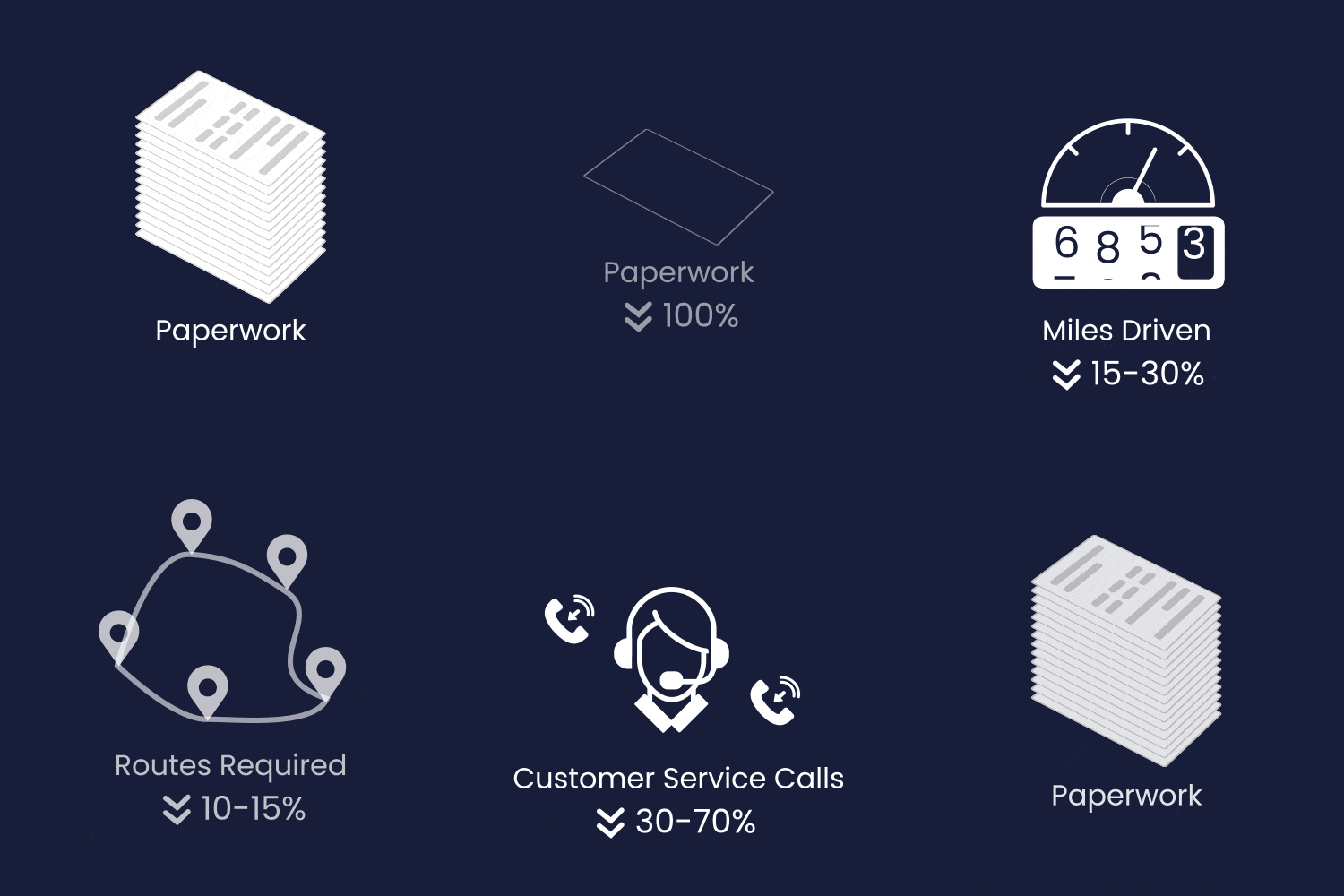
Route planning is the core engine of logistics efficiency. Whether you manage a last-mile delivery operation, a regional transportation network, or high-density multi-stop distribution routes, the accuracy of your routes directly impacts fuel spend, driver hours, customer experience, and overall operational profitability. Even a 5–10% improvement in routing efficiency can translate into major savings in fuel consumption, lower CO₂ emissions, and faster delivery turnarounds.
Traditional routing methods—static maps, manual dispatcher decisions, predefined zones, or outdated optimization algorithms—simply can’t keep pace with today’s dynamic delivery ecosystem. Traffic patterns shift minute by minute. Fuel prices fluctuate. Delivery density changes daily. Customer expectations for real-time ETAs, faster deliveries, and transparent visibility continue to rise.
In this environment, logistics providers need more than routing software.
They need AI-powered, context-aware, self-learning route planning that adapts in real time.
AI-driven route optimization introduces a new era of accuracy and automation. It analyzes millions of data points—traffic, weather, road restrictions, vehicle capacity, driver behavior, delivery windows, service times—and produces the most fuel-efficient, time-saving, and feasible route for every vehicle, every day.
AI not only reduces operational costs but significantly boosts on-time delivery performance, making it a strategic advantage for last-mile carriers, 3PLs, distributors, and retailers.
Understanding AI-Powered Route Planning
AI-powered route planning goes beyond simple map-based routing. It uses advanced algorithms, real-time operational data, and predictive intelligence to make routing faster, smarter, and more cost-efficient. Instead of relying on manual dispatcher experience or static routing rules, AI continuously learns from past trips, adapts to changing road conditions, and optimizes every delivery route with precision. This makes AI an essential tool for modern last-mile delivery, 3PL operations, retail distribution, and high-density multi-stop logistics networks.
What Is AI Route Planning?
AI route planning is an advanced approach to delivery routing that uses machine learning, predictive analytics, and real-time operational data to identify the most efficient route for every vehicle in your fleet. Unlike traditional systems that rely on static maps or dispatcher judgment, AI continuously learns from real-world conditions and automatically adjusts routes to achieve maximum fuel efficiency, minimum delays, and higher delivery accuracy.
AI considers hundreds of live and historical variables at once—something impossible for human planners or legacy routing tools. This allows logistics teams to operate with a level of precision and adaptability that reduces costs and improves fleet productivity.
Key Data Inputs AI Uses to Optimize Routes
AI evaluates a wide network of dynamic and static variables, including:
- Real-time traffic conditions (accidents, congestion, road closures)
- Weather patterns that can impact speed, safety, and fuel consumption
- Delivery windows and customer time-slot preferences
- Driver behavior and performance (speeding, idling, braking)
- Historical route performance to predict upcoming delays
- Fuel usage patterns to recommend the lowest-cost route
- Delivery density and stop clustering for multi-stop optimization
- Vehicle types & load capacity to ensure feasible, balanced routing
- Service times at each stop based on past performance
- Geographical terrain (hills, city zones, low-speed areas)
- Regulatory restrictions such as weight limits or delivery curfews
By processing all these variables simultaneously, AI doesn’t just optimize a route once—it continuously adapts it throughout the day as conditions change.
How AI Transforms the Routing Workflow
Instead of manually creating or adjusting routes, AI:
- Generates optimal routes automatically
- Analyzes constraints and prioritizes fuel efficiency
- Predicts delays before they happen
- Re-routes vehicles dynamically based on real-time changes
- Ensures compliance with delivery windows, load rules, and customer SLAs
This leads to:
- Faster deliveries
- Lower fuel consumption
- Reduced driver stress
- Higher on-time delivery performance
- Better utilization of every vehicle
How AI Differs from Traditional Route Planning
AI-powered route planning marks a major shift from the manual, map-based, and dispatcher-driven approaches used for decades. Traditional routing systems work on fixed rules and limited data, making them slow to adapt when traffic changes, fuel prices rise, or delivery volumes spike. In contrast, AI uses real-time data, predictive modeling, and continuous learning to generate smarter, faster, and more efficient delivery routes.
AI doesn’t just find a path from point A to B—it understands patterns, predicts risks, analyzes fuel usage, and automatically re-optimizes routes as conditions change. This creates a more reliable, consistent, and scalable logistics operation.
Traditional Route Planning vs. AI-Powered Route Planning
| Traditional Route Planning | AI-Powered Route Planning |
| Static maps & fixed schedules | Dynamic, real-time routing updates |
| Heavy reliance on human decision-making | Autonomous, machine-driven optimization |
| Considers limited variables | Analyzes hundreds of variables simultaneously |
| Uses historical or past data only | Combines predictive analytics + real-time insights |
| Inefficient fuel usage due to static routing | Maximizes fuel efficiency with intelligent routing |
| Slow response to traffic, weather, and disruptions | Instant automated rerouting and ETA recalculation |
Why AI Is a Breakthrough for Logistics
AI-powered routing significantly improves:
- Fuel efficiency by selecting low-consumption routes
- On-time delivery rates through predictive delay avoidance
- Driver productivity with optimized workloads
- Operational visibility via real-time monitoring
- Scalability during peak seasons or rapid growth
AI doesn’t just calculate distance—it predicts, learns, and improves route efficiency every single day, making it a critical technology for last-mile delivery, multi-stop routing, and high-density logistics networks.
How AI Reduces Fuel Costs
Fuel cost reduction is one of the most immediate and measurable benefits of adopting AI-powered route planning. In logistics operations where fuel represents 30–40% of total operating expenses, even small improvements in routing efficiency can create massive year-round savings. AI minimizes unnecessary mileage, reduces idling, improves route sequencing, and optimizes vehicle load distribution — all of which significantly cut fuel consumption.
Traditional routing often leads to longer detours, inefficient stop orders, congested routes, or inconsistent driving behavior. AI eliminates these inefficiencies by analyzing real-time road conditions and automatically selecting routes that minimize fuel burn while still meeting delivery windows and customer expectations.
Real-Time Traffic and Road Condition Analysis
AI-powered routing relies heavily on real-time traffic and road condition analysis, making it far more accurate and adaptive than traditional routing methods. By ingesting live traffic intelligence from millions of dynamic data points—GPS navigation signals, city traffic sensors, driver telematics, historical trip data, and weather API feeds—AI can understand what is happening on the road at any given moment. This constant stream of information enables the system to anticipate delays before they occur and recommend the most efficient path instantly.
Because AI is continuously analyzing these inputs, it can automatically:
- Avoid traffic jams by predicting congestion patterns early and rerouting drivers before they get stuck.
- Bypass accidents or sudden road closures using real-time alerts from connected sensors and traffic authorities.
- Select alternate routes automatically without requiring dispatcher intervention, ensuring drivers always stay on the fastest, most fuel-efficient path.
- Reduce idling, stop-go driving, and unnecessary detours, which are major contributors to excessive fuel consumption.
By preventing vehicles from wasting time and fuel in congested or high-traffic areas, AI-driven traffic analysis typically delivers a 10–20% reduction in fuel usage, based on industry-wide benchmarks. This makes real-time data one of the most powerful contributors to immediate operational savings in last-mile delivery and transportation networks.
Optimizing Route Length and Driving Behavior
AI plays a major role in reducing fuel costs by optimizing both route length and driver behavior, two of the biggest contributors to fuel waste. In traditional routing setups, drivers often face frequent stops, poorly planned routes, and inconsistent driving habits—all of which significantly increase fuel burn. Every unnecessary stop, sharp acceleration, or idle minute adds up across an entire fleet.
Fuel consumption rises sharply when fleets experience:
- Frequent stops, which force vehicles into repeated acceleration cycles.
- Harsh acceleration, which burns more fuel than steady driving.
- Unplanned idling, where the engine runs without movement, wasting fuel.
- Poor route sequencing, which leads to backtracking, longer distances, and inefficient stop order.
AI eliminates these inefficiencies by analyzing real-time road conditions, historical driving patterns, vehicle load, delivery density, and service times to choose:
- The shortest feasible route, ensuring vehicles travel only the distance truly required.
- The least fuel-consuming path, even if it’s not always the shortest in miles (e.g., fewer hills, smoother speeds).
- The best delivery sequence, preventing zig-zag patterns or unnecessary detours.
- Driving behavior recommendations, helping drivers adopt fuel-efficient habits.
Some advanced AI systems even provide real-time driver coaching, alerting drivers when they brake too hard, accelerate too quickly, or idle excessively. This continuous feedback helps fleets build safer, more fuel-efficient driving patterns across all drivers, leading to measurable fuel savings and smoother operations.
Vehicle Load and Capacity Optimization
Vehicle load and capacity have a significant impact on fuel efficiency. Underutilized vehicles carry empty space, wasting fuel on trips that could be consolidated, while overloaded vehicles experience higher fuel consumption due to increased weight. Both scenarios reduce overall operational efficiency and raise costs.
AI addresses these challenges by intelligently optimizing load distribution, delivery density, and vehicle selection. By analyzing each vehicle’s capacity, the number of stops, package weight, and delivery requirements, AI can:
- Balance loads across vehicles, ensuring each truck or van is efficiently utilized without exceeding capacity limits.
- Optimize delivery density, clustering deliveries to reduce unnecessary trips or scattered routes.
- Select the right vehicle type for each route, matching smaller vehicles to lighter loads and larger vehicles to heavier deliveries.
- Predict fuel usage based on weight, allowing planners to minimize energy-intensive trips.
- Sequence multi-stop routes for optimal efficiency, reducing backtracking and excess mileage.
In high-density delivery areas, smart AI load optimization alone can reduce fuel burn by an additional 5–12%, simply by improving how packages are distributed and routed. Combined with real-time traffic analysis and route sequencing, this creates a highly efficient, cost-saving delivery network.
Improving On-Time Deliveries with AI
On-time delivery is one of the most important KPIs for logistics providers, directly impacting customer satisfaction, retention, and operational efficiency. Late deliveries can lead to increased costs, negative reviews, and lost business opportunities, especially in high-volume last-mile operations.
AI enhances on-time delivery performance by combining automation, predictive analytics, and live decision-making. Unlike traditional methods that react to delays after they occur, AI proactively anticipates disruptions—traffic congestion, weather delays, vehicle breakdowns, or unforeseen delivery challenges—and automatically adjusts routes in real time.
Key ways AI ensures timely deliveries include:
Dynamic Rerouting and Predictive Analytics
Real-time disruptions—traffic jams, accidents, sudden weather changes, or unexpected driver delays—are among the primary reasons deliveries fail or miss their scheduled windows. Traditional routing systems can only react after a delay occurs, which often results in missed deliveries, unhappy customers, and higher operational costs.
AI overcomes this challenge by combining dynamic rerouting with predictive analytics, allowing logistics providers to anticipate potential delays and adjust routes before problems occur. Using vast datasets from GPS feeds, telematics, historical traffic patterns, weather forecasts, and driver performance, AI continuously forecasts disruptions that could impact delivery schedules.
Key predictive capabilities include:
- Weather disruptions: Rain, snow, or extreme conditions that slow traffic or make certain routes unsafe.
- Rush-hour trends: Predicting peak traffic times and rerouting to avoid congestion.
- Roadblocks or closures: Accidents, construction zones, or emergency incidents.
- Delivery window changes: Customer reschedules or time-sensitive adjustments.
- Driver delays: Accounting for fatigue, vehicle performance, or unexpected stops.
By analyzing these factors, AI can dynamically reroute vehicles in real time, choosing alternative paths that maintain efficiency and minimize fuel consumption. Logistics providers implementing predictive dynamic rerouting typically see on-time delivery improvements of 15–25%, along with reduced stress on drivers and smoother fleet operations.
Struggling to maintain product quality during transit? IoT and automation make cold chains smarter.
Discover Cold Chain TechEnhancing Driver Performance and Compliance
Driver performance and compliance are critical to ensuring efficient, safe, and on-time deliveries. In traditional logistics operations, monitoring driver behavior and adherence to schedules is manual, reactive, and prone to errors. AI transforms this process by continuously tracking driver patterns, route adherence, and compliance requirements, providing actionable insights in real time.
AI ensures that:
- Drivers follow optimized routes: By monitoring adherence to AI-generated routes, the system minimizes deviations that can lead to delays or unnecessary fuel consumption.
- Delivery windows are met: AI tracks progress against scheduled delivery times and provides alerts to prevent late arrivals.
- Safety rules and regulations are observed: AI monitors driving behavior—including speed, braking, and acceleration—ensuring compliance with traffic laws and company safety standards.
- Performance anomalies are flagged instantly: Deviations from route, excessive idling, or risky driving behavior trigger immediate notifications, allowing corrective action before it impacts deliveries.
Platforms like nuVizz’s real-time visibility solution provide live ETA updates to customers, reducing missed deliveries, complaints, and support calls. At the same time, fleet managers gain a comprehensive view of driver performance, enabling continuous coaching, improved safety, and operational efficiency.
By combining route optimization, predictive analytics, and live monitoring, AI not only improves on-time delivery rates but also enhances driver productivity, safety, and overall compliance—critical factors for high-density last-mile logistics.
Case Studies: Success Stories in AI Route Planning
AI-driven route optimization is no longer a futuristic concept—it is delivering measurable results across logistics and delivery networks worldwide. Companies that implement AI-powered routing, predictive analytics, and real-time fleet monitoring consistently report lower fuel costs, improved on-time delivery rates, and higher operational efficiency.
Here are examples of how AI transforms logistics operations:
1. Retail Distribution Network
In a large retail distribution network, AI-powered route planning delivered significant operational improvements. By analyzing historical delivery data, real-time traffic conditions, and vehicle load capacities, the AI system optimized routes for hundreds of delivery vehicles across urban and suburban areas.
Key results included:
- Reduced distance by 18%: Routes were intelligently sequenced and clustered, eliminating unnecessary detours and backtracking.
- Fuel cost savings of 22%: Optimized routes and improved load balancing directly reduced fuel consumption across the fleet.
- Improved on-time deliveries from 78% to 94%: Dynamic rerouting, predictive analytics, and real-time monitoring allowed drivers to avoid delays and meet delivery windows consistently.
This example illustrates how AI can transform large-scale retail logistics, delivering measurable benefits in cost, efficiency, and customer satisfaction.
2. Pharmaceutical Delivery Fleet
Maintaining a reliable cold chain is critical for pharmaceutical deliveries, where temperature-sensitive products must arrive on time to ensure safety and efficacy. AI-powered route planning helped a pharmaceutical delivery fleet enhance operational reliability while reducing costs.
Key outcomes included:
- Improved cold-chain stability: AI optimized routes to minimize travel time and avoid delays, ensuring temperature-sensitive medications were delivered under proper conditions.
- Predictive ETAs reduced failed deliveries by 30%: By forecasting potential disruptions such as traffic, weather, or driver delays, AI dynamically rerouted vehicles before delays occurred, significantly lowering missed or late deliveries.
- Saved 12% in fleet fuel consumption: Optimized route sequencing, load distribution, and real-time traffic analysis reduced unnecessary mileage and fuel usage across the fleet.
This case demonstrates how AI is particularly valuable in time-critical and high-compliance logistics, combining operational efficiency with customer safety and satisfaction.
3. Last-Mile E-Commerce Carrier
For high-volume e-commerce carriers, speed, accuracy, and flexibility are critical. AI-powered route planning and automated dispatch transformed operations by reducing planning time and preventing delivery failures.
Key results included:
- Automated dispatch reduced planning time from 3 hours to 15 minutes: AI automatically generated optimized multi-stop routes based on real-time traffic, package volume, delivery windows, and vehicle capacity, drastically cutting manual planning effort.
- AI rerouting prevented 1,500+ missed deliveries per month: By continuously monitoring traffic, weather, and driver performance, the system dynamically rerouted vehicles around potential delays, ensuring packages reached customers on time.
This example highlights how AI empowers e-commerce carriers to scale operations efficiently, reduce operational overhead, and significantly improve on-time delivery performance, even during peak seasons.
Environmental Impact: Cutting Carbon Footprint Through AI
Fuel efficiency is not only a cost concern—it directly affects a logistics company’s carbon footprint and sustainability performance. AI-powered route planning plays a critical role in helping companies reduce emissions, optimize resource usage, and meet Environmental, Social, and Governance (ESG) goals.
By intelligently planning routes and monitoring fleet operations in real time, AI helps logistics providers:
- Reduce miles driven: Efficient routing eliminates unnecessary detours, minimizing fuel consumption and emissions per delivery.
- Limit idling and stop-go driving: Real-time traffic analysis and predictive rerouting prevent vehicles from wasting fuel in congestion, reducing CO₂ output.
- Optimize fleet usage: Matching the right vehicle with the right load ensures no trips are under- or over-utilized, further lowering emissions.
- Transition routes suitable for EVs: AI can plan deliveries specifically for electric vehicles, accounting for range, charging infrastructure, and efficiency.
- Track carbon KPIs in real time: Companies gain visibility into fleet emissions and fuel savings, enabling reporting for ESG compliance and sustainability initiatives.
Industry data shows that logistics companies leveraging AI for routing and fleet management can achieve up to 20% reduction in CO₂ emissions, while simultaneously cutting operational costs. By integrating AI into everyday delivery operations, businesses can make significant progress toward environmentally responsible logistics without compromising speed, reliability, or service quality.
Getting Started: Implementing AI Route Planning in Your Business
Transitioning to AI-powered routing is simpler than many businesses assume. With modern logistics technology, companies of all sizes—from small last-mile delivery fleets to large distribution networks—can quickly adopt AI to improve efficiency, reduce costs, and enhance customer satisfaction.
Here’s how to get started:
1. Assess Your Current Routing Workflows
The first step in implementing AI-powered route planning is to understand your existing logistics processes. Take a close look at how routes are currently planned and executed, identifying areas that are manual, time-consuming, or prone to error. Common inefficiencies include repetitive data entry, reliance on static maps, lack of integration between dispatch and fleet management systems, and inconsistent adherence to delivery windows.
By documenting these bottlenecks, you create a baseline for improvement. This assessment helps you determine where AI can provide the most immediate impact, whether it’s automating route generation, optimizing multi-stop sequencing, or reducing fuel consumption. Understanding your current workflow also ensures smoother integration of AI tools without disrupting ongoing operations.
2. Choose an AI-Driven Routing Platform
Selecting the right AI-powered routing platform is critical to unlocking the full benefits of intelligent logistics. Not all solutions are created equal, so it’s important to evaluate platforms based on capabilities, integration options, and scalability.
Key features to look for include:
- Real-time visibility: Monitor fleet location, delivery progress, and potential disruptions to make informed decisions instantly.
- Dynamic route optimization: Automatically adjust routes based on traffic, weather, and other changing conditions to maximize efficiency.
- Predictive analytics: Forecast delays, optimize delivery sequences, and anticipate resource needs using historical and real-time data.
- Load and capacity intelligence: Ensure vehicles are used efficiently, balancing deliveries to minimize empty miles and overloading.
- Integration with TMS/WMS: Seamless connection with your transport or warehouse management systems ensures data consistency and operational efficiency.
- Driver performance analytics: Track driver behavior, fuel consumption, and adherence to optimized routes to improve safety, efficiency, and compliance.
Choosing a platform with these capabilities ensures that your business can leverage AI not just for routing, but for end-to-end operational efficiency, including cost savings, faster deliveries, and reduced environmental impact.
3. Run AI Alongside Your Existing Workflows
For most businesses, the transition to AI-powered routing is best approached gradually. Running AI alongside your existing workflows—often called a hybrid approach—allows your team to test, validate, and gain confidence in the new system before fully automating operations.
In this phase:
- AI generates optimized routes while your dispatch team continues traditional planning.
- You can compare AI suggestions against manual routes to evaluate improvements in fuel efficiency, delivery times, and load utilization.
- Drivers receive AI-guided routes but still have familiar workflows for reference, reducing disruption and easing adoption.
- Real-time data from the AI platform helps identify areas where your current workflows are inefficient or prone to errors.
This hybrid approach minimizes risk, enables training for staff, and ensures that AI implementation delivers measurable results. Over time, as confidence and system accuracy grow, businesses can fully automate routing, unlocking the full benefits of dynamic, predictive, and optimized logistics.
Still dealing with delayed or inefficient delivery routes? Dynamic routing changes everything. Explore Smarter Route Optimization
4. Train Your Team
Successful AI implementation requires that drivers, dispatchers, and operations managers understand how to use the new system effectively. Quick, focused onboarding ensures that your team can maximize the benefits of AI routing from day one.
Key training considerations include:
- Drivers: Learn to follow AI-generated routes, interpret dynamic rerouting notifications, and adopt fuel-efficient driving practices suggested by the platform.
- Dispatchers: Understand how to monitor AI recommendations, intervene when necessary, and use real-time insights to manage exceptions.
- Operations Managers: Gain visibility into fleet performance metrics, fuel consumption, on-time deliveries, and carbon KPIs to make strategic decisions.
Training should also cover best practices for hybrid operations during the transition phase, including comparing AI routes with traditional planning, recognizing potential errors, and providing feedback to improve the system. Proper training ensures faster adoption, higher accuracy, and measurable operational improvements.
5. Scale Using Continuous Learning
One of the most powerful features of AI-powered routing is its ability to learn and improve continuously. Unlike static routing systems, AI platforms adapt with every trip, analyzing data from completed deliveries, traffic patterns, driver behavior, and vehicle performance to deliver increasingly optimized results over time.
Key aspects of scaling with continuous learning include:
- Data-driven refinement: Each completed route provides new insights that the AI uses to improve predictions, sequencing, and rerouting strategies.
- Adaptive efficiency: Routes become progressively shorter, more fuel-efficient, and better aligned with delivery windows as the system learns from historical and real-time data.
- Predictive foresight: AI identifies recurring patterns, such as peak traffic times, seasonal demand surges, or high-density delivery zones, and proactively adjusts future routes.
- Fleet-wide optimization: Continuous learning ensures that improvements are applied across the entire fleet, not just individual routes, creating consistently higher performance at scale.
By leveraging this self-improving capability, businesses can maximize ROI, reduce operational costs, improve on-time deliveries, and maintain a competitive edge in last-mile logistics.
Conclusion: The Future of AI-Driven Logistics
AI is fundamentally reshaping the logistics landscape, giving companies unprecedented control over route planning, fuel efficiency, delivery accuracy, and overall operational performance. Traditional methods are no longer sufficient to meet rising customer expectations, growing delivery volumes, and the demands of high-density urban logistics.
By automating complex routing decisions, analyzing thousands of variables in real time, and continuously learning from every delivery, AI empowers logistics teams to:
- Lower fuel costs through optimized routes, reduced idling, and smarter vehicle utilization.
- Achieve higher delivery accuracy with predictive ETAs, dynamic rerouting, and real-time traffic analysis.
- Maximize fleet efficiency by balancing loads, sequencing multi-stop deliveries, and reducing wasted miles.
- Reduce carbon emissions by minimizing fuel usage and enabling EV-ready route planning.
- Enhance driver performance with live feedback and compliance monitoring, ensuring safer and more efficient operations.
- Respond faster to unpredictable disruptions, including traffic congestion, weather changes, and sudden delivery adjustments.
The companies that embrace AI-powered route planning today will gain a lasting competitive advantage, delivering faster, more reliable, and environmentally responsible logistics services. For businesses of all sizes—from last-mile carriers to large distribution networks—the time to adopt AI is now. By integrating these intelligent systems into your operations, you not only optimize costs and performance but also future-proof your logistics for the demands of 2026 and beyond.