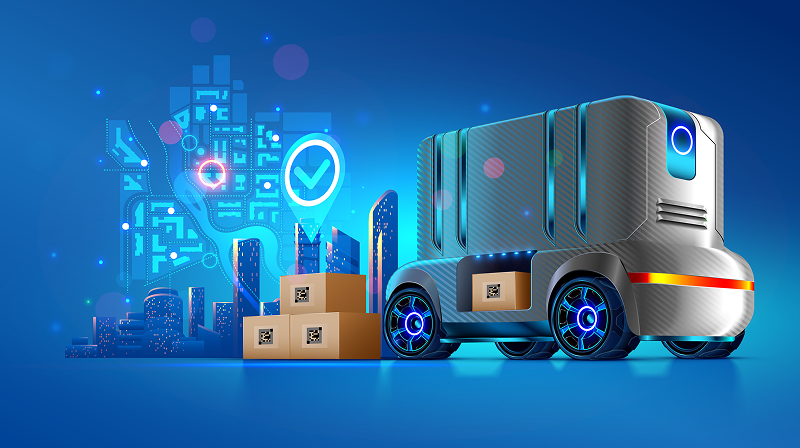
The last leg of delivery—the last mile—is often the most expensive, inefficient, and customer-facing part of the logistics chain. With increasing expectations for same-day and contactless delivery, along with rising labor shortages and urban congestion, traditional delivery models are falling short. This is where autonomous vehicles (AVs) enter the scene.
The concept of autonomous delivery is no longer futuristic. With pilot programs already in motion and AI technologies driving rapid adoption, self-driving vehicles, sidewalk robots, and drones are becoming integral components of last-mile delivery. But while most logistics providers are focused on the hardware, the real transformation lies in how these vehicles interact with AI-powered Last Mile TMS (Transportation Management Systems).
This blog explores the future of autonomous last-mile delivery and how companies can stay ahead by leveraging untapped opportunities that most competitors are missing.
Persistent Problems in Last-Mile Logistics
Before diving into solutions, it’s important to understand the key pain points AVs aim to solve:
● Driver shortages and high turnover
● Inefficient manual dispatching
● Inaccurate ETAs and poor customer communication
● High delivery costs (up to 53% of total shipping cost)
● Lack of scalability during peak demand
These issues are especially amplified in industries like food delivery, pharma logistics, and auto parts distribution, where speed, precision, and compliance are non-negotiable.
Speed matters in last-mile logistics—see how the right software helps in our blog on reducing delivery time with route optimization.
Autonomous Vehicles in Last-Mile: The Key Benefits
The integration of autonomous vehicles (AVs) in last-mile delivery logistics offers tangible, transformative benefits across operational efficiency, cost reduction, scalability, and customer experience. Unlike traditional delivery models that rely heavily on manual labor and static routing, AVs operate with AI precision, data-driven logic, and continuous performance—empowering logistics teams to scale intelligently.
Here’s a detailed look at the key advantages of autonomous last mile delivery:
● Labor Cost Reduction & Operational Scalability
Labor is one of the biggest cost centers in last-mile logistics. Autonomous vehicles eliminate the need for driver salaries, insurance, overtime, and compliance-related HR costs. This opens the door to cost-effective delivery at scale, especially during peak season or in regions with driver shortages.
Additionally, businesses can deploy AV delivery fleets in urban, suburban, or campus settings without increasing headcount—making last mile automation truly scalable.
Not sure if it’s time to upgrade from manual planning? Our blog on manual vs. automated routing breaks it down clearly.
● 24/7 Delivery Capability & Reduced Downtime
Unlike human drivers, autonomous vehicles don’t require breaks or shifts. They can operate during nights, weekends, and holidays, significantly expanding delivery windows and reducing missed deliveries. For businesses offering time-sensitive services (like healthcare or food), this round-the-clock availability becomes a game-changer.
Plus, the AVs can be programmed to recharge during off-peak hours, ensuring maximum uptime without interrupting business workflows.
● Enhanced Delivery Efficiency & Route Optimization
Autonomous vehicles, when integrated with AI-powered route optimization software, ensure precision-based dispatching. Using real-time data such as traffic patterns, weather updates, and delivery time windows, AVs dynamically adjust routes on the go—minimizing fuel usage, idle time, and delays.
This is further boosted by robodispatch systems, which automatically assign the most efficient route and vehicle based on package type, load size, and proximity to destination—removing human inefficiencies from the dispatch process.
● Increased Delivery Accuracy and Fewer Failed Deliveries
With AVs, GPS mapping and geofencing technologies allow vehicles to deliver with pinpoint accuracy—reducing common issues like failed first attempts, missed addresses, or manual errors. When combined with real-time delivery tracking, both logistics teams and customers can see exact drop-off progress, creating accountability and trust.
Moreover, Proof of Delivery (POD) features—like geotagged images or OTP-based verification—add another layer of confidence in each transaction, especially critical in pharma or B2B logistics.
● Lower Environmental Impact
Most AVs being deployed today are electric-powered, helping reduce emissions and align with sustainability mandates. This makes them ideal for green logistics strategies, supporting brand ESG goals and appealing to eco-conscious consumers.
By optimizing load planning and dispatch, AVs also minimize the number of miles driven and maximize delivery density—further reducing fuel usage and carbon footprint.
Ever wondered how giants like Amazon and FedEx handle last-mile delivery? Check out our blog on how TMS helps them optimize deliveries.
● Data-Driven Decision Making
Every AV delivery generates a wealth of data—route performance, delivery times, delays, traffic issues, etc. When analyzed through a Last Mile TMS, this data becomes fuel for strategic decisions. Fleet
managers can monitor KPIs, identify inefficiencies, and predict future challenges before they occur.
This continuous feedback loop enables smarter planning and builds long-term competitive advantages in logistics performance.
Summary Table: Key Benefits of AVs in Last-Mile Delivery
| Benefit | Business Impact | Who It Helps |
| Labor cost reduction | Lower OPEX | Retailers, 3PLs, Carriers |
| 24/7 delivery ops | Increased throughput | Food, Pharma |
| AI-driven routing | On-time deliveries | All industries |
| Higher delivery accuracy | Better customer experience | End-users, Retail |
| Eco-friendly transport | Brand sustainability | ESG-focused firms |
| Real-time data analytics | Smarter logistics | Enterprise logistics managers |
How Autonomous Vehicles Work With a Last Mile TMS
While AVs capture headlines, they can’t function efficiently in isolation. A modern Last Mile TMS platform integrates autonomous fleets into a unified system that drives:
● AI-Powered Route Optimization
Software like robo-dispatch systems uses AI to calculate the most efficient routes for AVs in real-time based on live traffic, delivery windows, weather, and historical data.
● Real-Time Visibility
Customers and logistics managers get live updates on AV location, ETA, and delivery status—all through self-service portals, improving customer satisfaction.
● Dynamic Load Planning and Dispatch
TMS software ensures that AVs are loaded efficiently based on delivery priority, vehicle capacity, and route constraints.
● Proof of Delivery (POD) with Compliance
From e-signatures to photo POD, all delivery interactions are recorded, ensuring audit readiness—crucial for pharma and B2B operations.
Want to boost efficiency in your fleet? Check out our blog on how route optimization software works for shippers & carriers.
Industry-Specific Use Cases for Autonomous Last-Mile Delivery
While many logistics providers adopt a one-size-fits-all approach, autonomous last-mile delivery is most powerful when customized to industry needs. Different verticals—like pharmaceuticals, retail, furniture, auto parts, and food logistics—face unique challenges in the final mile. Tailoring autonomous delivery strategies with the help of a robust Last Mile TMS makes a significant difference in performance, compliance, and ROI.
Here’s how various industries can unlock value from autonomous last-mile delivery:
● Pharmaceutical & Healthcare Logistics
Speed and precision are mission-critical in healthcare. Delays or errors in delivery can directly impact patient outcomes and regulatory compliance. Autonomous vehicles enhance safety, compliance, and traceability in this highly sensitive space.
Key Challenges:
● Urgency in medication delivery
● Temperature-sensitive cargo
● Regulatory compliance (HIPAA, FDA)
● Proof of delivery for audit trails
Autonomous Delivery Impact:
● AVs ensure time-critical deliveries to hospitals, pharmacies, and clinics using AI-optimized routes.
● Integrated cold chain monitoring ensures temperature-controlled delivery of vaccines or biologics.
● Real-time visibility and POD features ensure compliance and traceability across the supply chain.
● Contactless delivery and automation reduce human error and increase patient safety.
👉 Example Use Case: A medical courier service uses autonomous vehicles integrated with a TMS to dispatch lab samples with real time alerts, reducing delays by 40%.
Curious how AI is transforming last-mile logistics? Explore our insights on AI-powered route optimization and see how it’s reshaping delivery efficiency.
● Auto Parts & Industrial Equipment
For workshops and manufacturing facilities, downtime equals revenue loss. Timely delivery of auto parts is essential. AVs provide predictable, on-time delivery while eliminating manual coordination and uncertainty.
Key Challenges:
● B2B demand for fast replenishment
● Delivering to workshops or warehouses with tight schedules
● Managing a wide range of SKUs
Autonomous Delivery Impact:
● Driverless vehicles perform scheduled replenishments to repair shops and showrooms with precision timing.
● Real-time tracking ensures mechanics and service teams know exactly when parts arrive, reducing downtime.
● TMS integration allows auto ERP or warehouse systems to trigger autonomous dispatch based on inventory thresholds.
👉 Example Use Case: An aftermarket parts distributor automates night-time deliveries using AVs, reducing delivery costs by 35% and improving SLA compliance.
Wondering how to stay ahead in the competitive logistics landscape? Discover the key strategies for optimizing last-mile delivery routes in 2025 that can give your business an edge.
● Furniture, Appliances & Bulky Goods
Delivering large, high-value Furniture & Appliances items requires more than just transportation—it demands coordination and customer satisfaction. AVs streamline this process by handling curbside logistics while syncing with human delivery teams for final placement.
Key Challenges:
● Large, high-value items prone to damage
● Need for coordination between driver and customer
● Long delivery windows lead to customer dissatisfaction
Autonomous Delivery Impact:
● AVs handle curbside drop-offs for bulky items while human agents are deployed selectively for in-home or white-glove services.
● AI-powered delivery scheduling narrows ETA windows, improving customer satisfaction and reducing waiting time.
● Real-time updates and branded customer visibility portals offer full delivery transparency.
👉 Example Use Case: A furniture retailer uses AVs for pre-scheduled drops while customers book assembly via self-service, streamlining the delivery chain.
● Retail & E-commerce Delivery
Retail & E-commerce success hinges on delivery speed, accuracy, and transparency. During peak sales periods, traditional fleets struggle. Autonomous fleets backed by intelligent dispatch scale effortlessly and deliver superior customer experiences.
Key Challenges:
● Managing thousands of SKUs across locations
● Demand spikes during sales/holiday seasons
● High customer expectations for ETA accuracy
Autonomous Delivery Impact:
● AVs handle urban drop-offs efficiently, working around-the-clock to fulfill same-day and next- day orders.
● TMS platforms dynamically reroute AVs based on live order influx and customer location changes.
● Customer communication modules keep shoppers updated via SMS, email, or app notifications.
👉 Example Use Case: A fashion e-commerce brand uses an AV fleet managed by a TMS during festive sales, delivering 20% more packages without increasing labor.
Looking to enhance customer satisfaction? Learn how advanced delivery management software can improve your delivery processes.
● Food & Grocery Logistics
Freshness is everything in food and grocery delivery. Customers expect fast, accurate, and temperature-controlled deliveries. AVs deliver speed, while AI dispatch ensures the right orders reach the right customers—fresh and on time.
Key Challenges:
● Short shelf life and perishability
● High order volume with short fulfillment windows
● Customer anxiety around order status
Autonomous Delivery Impact:
● Sidewalk robots and AVs handle short-range urban deliveries with minimal delays.
● AI dispatch systems prioritize orders based on perishability and delivery distance.
● Customers receive live tracking links and contactless delivery confirmation, ensuring freshness and satisfaction.
👉 Example Use Case: A grocery chain integrates AVs and robodispatch for local delivery, reducing missed deliveries by 60% and improving on-time rates.
Curious about the benefits of advanced delivery management software? Check out our post on advanced delivery management software benefits to learn more.
Summary Table: Autonomous Use Cases by Industry
| Industry | Top Use Case | Autonomous Vehicle Benefit | TMS Role |
| Pharma & Healthcare | Medical courier delivery | Compliance, temperature control | Route tracking, audit trails |
| Auto Parts | Night delivery to garages | Fast replenishment | Load planning & dispatch |
| Furniture & Appliances | Large item curbside drop | Coordinated handoffs | Customer scheduling & POD |
| Retail & E-commerce | Same-day delivery | Scale with demand | Robodispatch, ETA alerts |
| Food & Grocery | Perishable goods routing | 24/7 delivery windows | Priority-based routing |
Scaling Smart: AVs and the Future of Last Mile Delivery
The future of logistics isn’t about choosing between people and robots—it’s about orchestrating them together. Autonomous delivery vehicles will become the new normal, especially when paired with a robust Last Mile TMS platform that enables intelligent dispatching, real-time visibility, and seamless customer communication.
Early adopters who invest in integrated autonomous + AI logistics solutions will see gains in delivery speed, operational efficiency, and customer loyalty—while setting themselves apart from slower-moving competitors.
About nuVizz
nuVizz is a leading AI-powered Last Mile Delivery & TMS platform trusted by global shippers and carriers. With features like robo-dispatch, dynamic routing, proof of delivery, real-time tracking, and industry-specific compliance modules, nuVizz helps businesses transition into the future of logistics—one delivery at a time.