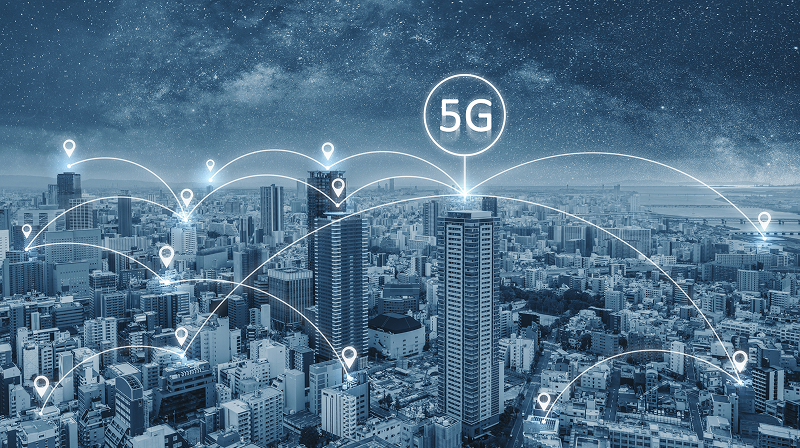
The last mile has always been the most complex and expensive segment of the logistics chain. In a world where consumers demand faster, more predictable deliveries, logistics providers are under pressure to optimize delivery routes with precision and adaptability. Emerging technologies like 5G and connected vehicle ecosystems are now transforming the way goods are moved in the final stretch. These innovations are not just about faster speeds—they enable a new layer of intelligence, real-time responsiveness, and seamless coordination across every element of the delivery network. As real-time decision-making becomes essential for success in logistics, 5G acts as the digital backbone for an evolved last-mile strategy.
Pain Points of Traditional Last-Mile Delivery
Despite significant investments in Last Mile TMS platforms and telematics, traditional last-mile delivery still struggles with:
● Static route planning
Routes planned once a day cannot adapt to real-time conditions
such as traffic jams or order cancellations.
● Inefficient use of vehicle fleets
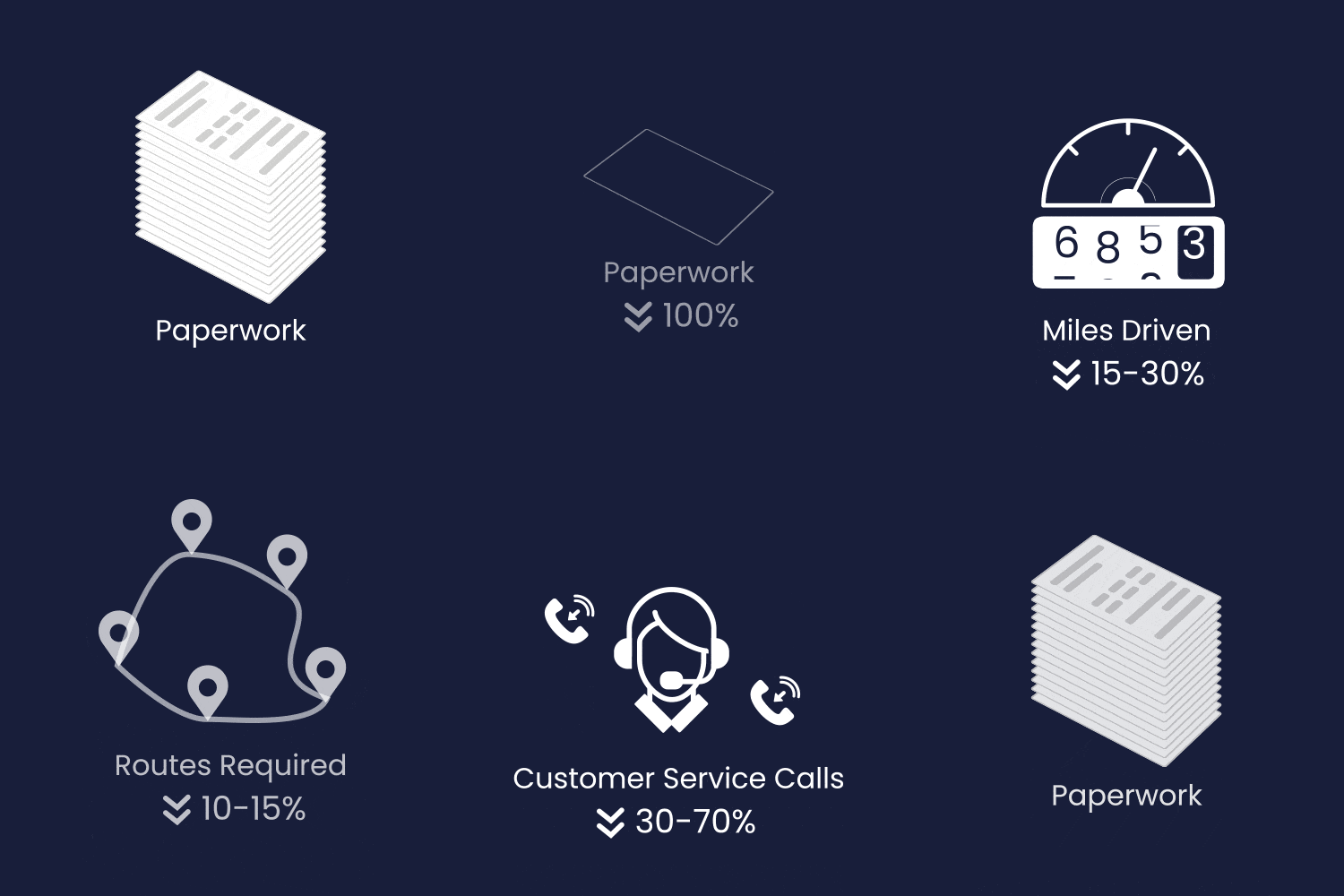
Underutilized capacity and poor route sequencing result in unnecessary fuel use and labor costs.
● Limited operational visibility
Dispatchers and managers often lack real-time insights into delivery progress, delays, or exceptions.
● Reactive issue resolution
Problems are usually addressed after they occur, leading to poor customer experiences and strained resources.
The combined impact of these challenges is a logistics system that is slow to adapt, costly to run, and prone to errors. The industry urgently needs a leap toward more intelligent, responsive infrastructure—and this is where 5G and connected vehicles step in.
Want to know how AI is transforming logistics? Read more
What 5G Brings to the Last Mile
5G isn’t just about faster mobile networks—it’s about enabling an entirely new paradigm of automation and intelligence. Here’s how it enhances the last-mile segment:
● Ultra-Low Latency
Milliseconds matter in logistics. With latency as low as 1 ms, 5G enables near-instantaneous communication between vehicles, dispatch systems, and sensors. This supports on-the-go decisions, like rerouting deliveries based on roadblocks or enabling dynamic ETAs based on current road conditions.
Struggling with delivery delays? Optimize with smart routing. Find out how
● High Bandwidth & Dense Connectivity
The last mile involves a dense array of data points—driver apps, customer tracking portals, GPS signals, in-vehicle cameras, and sensors. 5G enables seamless, simultaneous data transfer from thousands of connected devices, creating a highly informed operational ecosystem.
● Edge Computing Capabilities
5G allows for computing at the edge—close to where the action is. Instead of relying on cloud servers that may cause delays, processing can occur in-vehicle or in local hubs, reducing latency and improving responsiveness.
This three-fold benefit—low latency, high throughput, and localized intelligence—makes 5G a foundational technology for modern delivery systems.
Facing last-mile challenges? Here’s how to tackle them
Power of Connected Vehicles and V2X Communication
Connected vehicles, when combined with 5G, can function as intelligent, mobile data hubs. The real revolution, however, lies in Vehicle-to-Everything (V2X) communication:
● Vehicle-to-Infrastructure (V2I)
Through V2I, vehicles can receive updates from smart infrastructur —traffic lights, toll gates, bridges, and even weather stations. This allows for route adjustments to avoid disruptions before they happen.
● Vehicle-to-Vehicle (V2V)
Connected vehicles can share information with each other—such as sudden braking, accidents, or traffic flow patterns. This peer-to-peer communication improves fleet coordination and safety.
● Vehicle-to-Network (V2N)
Each vehicle communicates in real time with the central dispatch network, feeding in location, load status, driver behavior, and road conditions. Platforms like nuVizz can then use this data to reassign tasks, optimize delivery clusters, or trigger alerts for exceptions.
V2X, enabled by 5G, creates a smart delivery grid where each component contributes to overall efficiency and resilience.
Struggling with fuel cost hikes? Here’s a solution
Real-Time Route Optimization in Action
Let’s walk through how 5G and connected vehicles work together to transform a typical delivery operation:
- The driver logs into a Last Mile TMS-powered app and is assigned a dynamically optimized route based on traffic, order volume, and delivery windows.
- As the driver approaches a construction zone, a V2I alert is received from the city’s smart infrastructure.
- The nuVizz TMS platform re-optimizes the route in real time using edge computing and sends updated instructions to the driver.
- The customer, linked to the delivery through a live tracking portal, receives an updated ETA notification.
- Meanwhile, the vehicle’s onboard sensors detect tire pressure anomalies and report them via V2N, prompting preventive maintenance scheduling.
This seamless flow of information ensures deliveries remain on track and customers stay informed, while also minimizing costs and vehicle downtime.
Want to cut delivery delays by 30% with advanced fleet routing software? Learn more here.
Benefits for Logistics Providers and Shippers
When fully implemented, the 5G-connected last-mile model delivers measurable benefits:
● Faster Delivery Cycles
Dynamic rerouting avoids delays and shortens average delivery windows.
● Operational Cost Savings
Reduced idle time, fewer missed deliveries, and optimized routes cut down on fuel and labor costs.
● Improved Driver Productivity
With less manual coordination and more guidance, drivers focus on completing tasks safely and efficiently.
● Greater Customer Engagement
Real-time updates and transparent tracking enhance brand trust and satisfaction.
● Sustainability Gains
Optimized routing reduces unnecessary miles driven, contributing to emission reduction targets.
The shift from reactive to proactive delivery management powered by 5G marks a key competitive differentiator for today’s logistics leaders.
Why nuVizz is Leading
As a pioneer in Last Mile Transportation Management Solutions, nuVizz is uniquely positioned to help businesses leverage the benefits of 5G and connected vehicle technologies. Our platform integrates:
● Real-Time Visibility
Track every stop, driver, and package across the delivery chain.
● AI-Powered Optimization
Plan, sequence, and dispatch routes based on predictive intelligence.
● IoT-Ready Architecture
Seamlessly connect with sensors, vehicle systems, and smart infrastructure.
● Driver and Customer Apps
Facilitate smooth operations with branded notifications, proof of delivery, and feedback loops.
With a flexible, cloud-native framework, nuVizz supports scalable deployments—from local carriers to enterprise-level delivery networks.
Conclusion
The synergy of 5G technology and connected vehicle systems is reshaping the future of logistics. What once took hours to plan or resolve can now be handled in milliseconds. By unlocking real-time route optimization and autonomous decision-making at the edge, logistics companies can offer faster, safer, and more efficient deliveries.