In the logistics industry, especially last mile, trust is currency. Up until now the relationship between shippers and carriers has been marked by a mutual skepticism that undermines efficiency and collaboration. Despite being dependent on one another, these two sides of the supply chain coin are rarely on the same page due to lack of transparency.
However, that’s changing. Today’s technology, particularly network-based last-mile delivery, is making real-time visibility fully accessible while transforming shipper-carrier relationships. As volatility continues to be part of the logistics ecosystem with fragmented delivery ecosystems, technology is bridging the trust gap for shippers and carriers.
Transparency: The Missing Link in a Fragmented Market
Traditionally, the logistics industry operated in silos. Each party controlled its own data and guarded it tightly. Carriers were protective of pricing structures. Shippers didn’t always share forecasting details or service expectations. Then, deliveries didn’t go as planned.
The problem compounds in the last mile sector, where complexity grows exponentially. For example, brands that scale rapidly and begin working with a network of 10 or more carriers, each with its own systems, standards, and processes. Managing such a diverse network without a unifying technology layer is a recipe for missed handoffs, billing disputes, inconsistent customer experiences, and degraded trust.
Struggling with delays and rising logistics costs? Discover how AI turns your operations into a growth engine.
Transform Your Logistics TodayThat’s where network-enabled technology can be a game-changer. When all parties operate within the same platform, everyone is looking at the same data, such as delivery statuses, cost breakdowns, location attributes, delivery times, and performance benchmarks. There’s no longer a need to “take someone’s word for it.” The SaaS system acts as the single source of truth.
From Mistrust to Resilience
As carriers exit the market or adjust their services, shippers must pivot quickly to maintain service levels. That means being able to plug in new carrier partners without disrupting operations. When all carriers feed into a common tech infrastructure, onboarding becomes faster and less risky. This ability to maintain business continuity is critical.
A transparent system allows shippers to monitor cost structures in real-time and know how those costs impact the bottom line. It allows carriers to demonstrate compliance with SLAs, track packages down to the minute, and avoid disputes over delivery windows or proof of service.
Optimize every mile — see how AI transforms route planning to reduce costs and speed up last-mile deliveries.
Find Out HowEqually important is the ability to predict problems before they occur. AI-powered features like anomaly detection and predictive analytics can flag potential delivery issues early, enabling all parties to act before a customer is impacted. When technology enables proactive collaboration, service levels go up during times of disruption.
Building Stronger Partnerships
Technology, however, is just the enabler. It’s still up to humans to build relationships based on clear expectations, frequent communication, and performance accountability.
That starts with forecasting. Carriers need a realistic view of shipment volumes and service expectations, while shippers need clarity on carrier capacity and constraints. Advanced planning, sometimes months in advance, is no longer a luxury, but a necessity. Sharing projections for order lines, unit counts, and delivery destinations helps both parties optimize routes, allocate labor, and avoid surprises. That leads to exceeding consumer expectations every time.
Beyond planning, there must be a feedback loop. Performance evaluations should not only happen when something goes wrong. Consistent data analysis, coupled with real-time metrics, creates opportunities to optimize, iterate, and grow further. It also makes it easier to make data-driven decisions about when to expand, reduce, or adjust carrier partnerships.
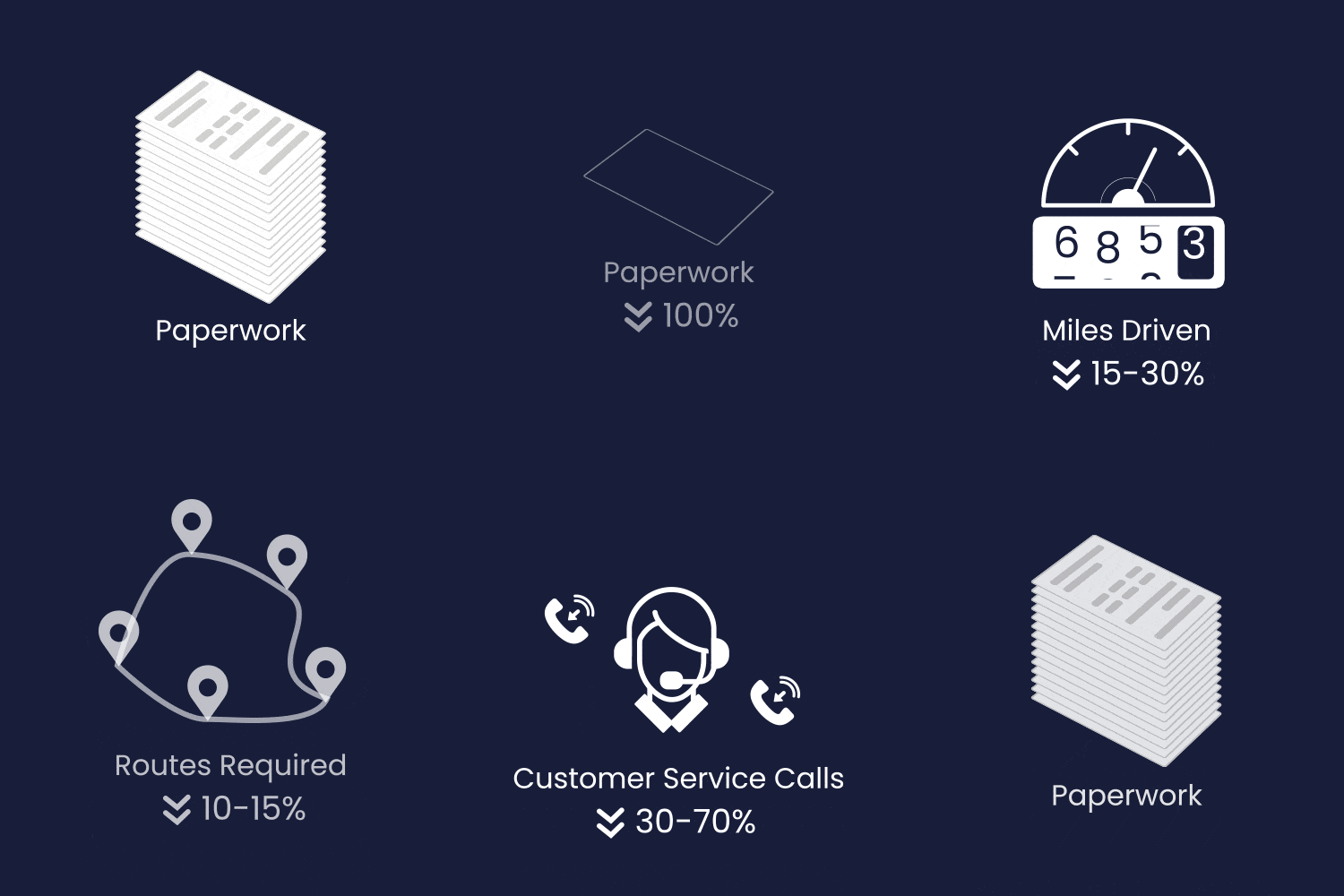
The traditional dynamic between shippers and carriers must give way to something more collaborative. Technology offers that path, not just by enabling automation or reducing paperwork, but by building a common foundation of trust and transparency. When all parties can see the same data, assumptions don’t exist. When communication is rooted in facts, not opinions, misunderstandings decrease.
It’s clear that shippers and carriers need to invest in shared visibility. Both must prioritize platforms that facilitate mutual transparency, not just as a tactical move, but as a strategic imperative. As consumer expectations continue to rise, the businesses that succeed will be those that treat technology as a foundation for collaboration and build trust through data. When shippers and carriers operate as equals in a transparent ecosystem, trust becomes a competitive advantage – not just for last mile operations but for building partnerships and stronger networks.
By: Guru Rao, Chief Executive Officer, nuVizz & Bart A. De Muynck