When logistics leaders talk about “route planning,” the conversation usually focuses on the shipper’s internal costs: How much fuel did we save? Did we hit the delivery window?
But there is a second, often ignored victim of poor planning: The Carrier.
Whether you operate a private fleet, utilize gig drivers, or contract with third-party logistics providers (3PLs), the efficiency of the person behind the wheel dictates the success of your supply chain. In the high-pressure environment of 2026, the margin for error is zero.
Poor route planning isn’t just an operational annoyance; it is an efficiency killer. It creates a layer of friction between your warehouse and the customer that results in missed Service Level Agreements (SLAs), frustrated drivers, and ultimately, a breakdown in your capacity.
If your route plan looks good on a spreadsheet but fails on the road, you are bleeding efficiency. Here is a deep dive into exactly how bad data and static plans destroy carrier performance.
1.The “Dwell Time” Trap: Losing Time Before the Wheels Turn
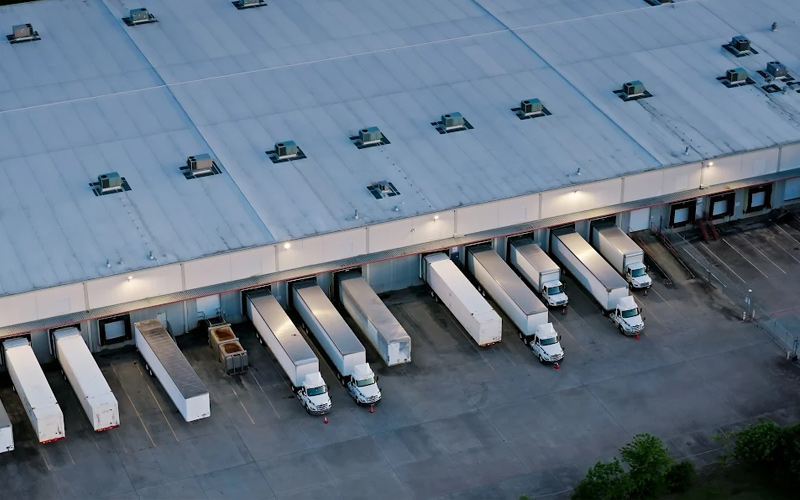
Efficiency doesn’t start on the road; it starts at the dock. One of the biggest killers of carrier efficiency is Dwell Time—the time a driver spends sitting at a facility waiting to load or unload. If your routing software doesn’t talk to your warehouse schedule, you are creating a bottleneck before the engine even starts.
How does poor planning increase dwell time?
Manual or static route planning often ignores “Warehouse Constraints.” A planner might schedule 15 trucks to depart at 8:00 AM because that is when the shift starts. However, if the warehouse only has 5 active dock doors, 10 of those drivers are going to sit idle for hours.
- Hours of Service (HOS): Drivers are legally limited in how many hours they can work. If they spend 3 hours sitting at your dock, that is 3 hours they cannot spend driving. You have effectively stolen their earning potential.
- Detention Fees: Carriers will charge you penalties (detention) for keeping them waiting, driving up your costs.
The Fix: Capacity-Aware Scheduling. Intelligent orchestration tools spread arrival times based on real-time dock capacity and labor availability, ensuring that when a driver arrives, a door is ready.
2. The “Deadhead” & Stem Mile Problem
To a driver, “Miles” come in two flavors: Revenue Miles (carrying a package) and Deadhead/Stem Miles (driving empty). When routing creates “Ping-Pong” paths—sending drivers back and forth across a city without a logical sequence—you burn the carrier’s fuel without giving them profit.
Turn delivery blind spots into complete supply chain transparency today.
Solve Visibility ChallengesWhat is the impact of unoptimized routes on deadhead miles?
Poor routing focuses only on the delivery drop and ignores the driver’s starting location or their next job.
- The “Stem” Issue: Manual planners often fail to account for the driver’s starting location. If a driver lives in the North, but you assign them a route starting in the South, they burn fuel just getting to the first stop.
The Carrier Impact: Every deadhead mile is pure waste. It consumes fuel and adds wear-and-tear to the vehicle without generating a cent of revenue. If your routes force high deadhead mileage, carriers will reject your tenders or demand higher rates to compensate.
- The Fix: Cluster-Based Routing. Algorithms group stops into tight geographic clusters to minimize travel time between drops. It ensures the truck stays full and moves in a continuous, profitable loop.
3. Driver Burnout: The Human Cost of Bad Math
We are in the midst of a chronic driver shortage. In this market, drivers have choices. They will not work for shippers who set them up to fail. When a route is planned using “Perfect World” averages instead of real-world data, the driver pays the price with stress and safety risks.
Why does inefficient routing lead to driver turnover?
Static tools often calculate drive times based on speed limits and zero traffic. They assume a truck can travel constantly and that every customer is waiting at the curb.
- The “Rush” Mentality: When a driver is fighting an impossible schedule, they skip breaks, speed, and drive aggressively. This increases the risk of accidents and liability.
- Psychological Stress: Constantly missing ETAs is demoralizing. Drivers who feel they can never “win” the day will quit.
- The Fix: Predictive Route Planning. Modern systems use historical data (e.g., “It actually takes 12 minutes to deliver to this mall, not 2 minutes”) to build realistic, achievable schedules that drivers trust.
4. The “Siloed” Communication Gap
Efficiency dies in the gap between the Dispatcher and the Driver. In a poorly planned environment, communication is reactive and frantic. Information is often trapped in the dispatcher’s head or on a sticky note, forcing the driver to pull over and make phone calls just to get basic details.
How does lack of data hurt carrier efficiency?
Without a unified digital platform, exceptions become time thieves.
- The Scenario: A driver arrives at a delivery, but the gate code is missing. They have to pull over, call dispatch, wait on hold, get the code, and try again.
- The Carrier Impact: A 5-minute phone call for every exception adds up. Across a fleet of 50 drivers, this can equal dozens of hours of lost productivity every week.
The Fix: Automated Workflows. The driver app should be the “Source of Truth.” It should contain gate codes, customer notes (“Beware of Dog”), and photo proof requirements. If an exception occurs, the driver should be able to resolve it in the app without a phone call.
The Financial Ripple Effect
Ultimately, poor route planning prevents you from becoming a “Shipper of Choice.”
In a tight market, carriers prioritize freight from shippers who are easy to work with.
- Efficient Shippers: Get their freight picked up first, pay lower rates, and have happier drivers.
- Inefficient Shippers: Face tender rejections, pay premium “spot market” rates, and suffer from constant delays.
You aren’t just planning a route; you are negotiating your future capacity.
How nuVizz Restores Carrier Efficiency
To fix carrier efficiency, you must stop treating “Routing” as a math problem and start treating it as a Relationship Problem.
nuVizz creates a unified ecosystem where the Shipper and Carrier succeed together.
1. Smart Appointment Scheduling
We align your warehouse labor with your route plans. We don’t invite drivers to the dock until we are ready to load them, eliminating dwell time.
2. Driver-Centric App:
Our mobile application handles navigation, proof-of-delivery, and exceptions in one flow. We empower the driver with data, reducing stress and confusion.
3. Fair Pay & Settlements:
Unlike basic routing tools, nuVizz tracks the actual route vs. the planned route. If a driver had to take a detour due to a road closure, our system captures that data so you can pay them fairly for the work they actually did.
Conclusion: Efficiency is a Two-Way Street
If you want your carriers to be efficient, you must give them efficient plans.
Stop handing them “Spaghetti Routes,” impossible time windows, and confusing instructions. Start handing them orchestrated, optimized delivery paths that maximize their revenue per mile and your on-time performance.
Don’t let poor planning drive your carriers away.
See how nuVizz improves driver retention and route efficiency.
Optimize Your Carrier Network