In the world of modern logistics, few phrases are more dreaded by customer support teams than: “Where is my order?” These “WISMO” inquiries are more than just a minor inconvenience; they are a significant drain on operational efficiency. Every minute an agent spends manually tracking down a driver, checking a manifest, or calling a warehouse is a minute stolen from high-value tasks. For many scaling businesses, WISMO calls account for up to 50% of all support tickets, creating a bottleneck that frustrates both staff and customers alike.
The reality of today’s “Amazon-prime-effect” marketplace is that customers don’t just want their products—they want certainty. When a brand fails to provide visibility, the “black hole” of the last mile creates anxiety, leading to a surge in expensive support interactions.
However, there is a clear path to reclaiming those lost hours. By implementing advanced Supply Chain Visibility (SCV) software, companies are seeing a transformative shift in their operations. It’s no longer just a theory: real-time transparency is proven to reduce customer support time by 20% or more.
In this blog, we’ll explore how moving from reactive tracking to proactive visibility empowers your customers, unburdens your support team, and ultimately turns your delivery process into a competitive advantage.
From Reactive to Proactive: The Power of Self-Service Transparency
The primary reason customer support lines stay busy is an information gap. When a customer doesn’t know where their delivery stands, they reach for the phone. Supply chain visibility software closes this gap by shifting the burden of information from the support agent to an automated, digital interface.
1. Putting the Map in the Customer’s Hands
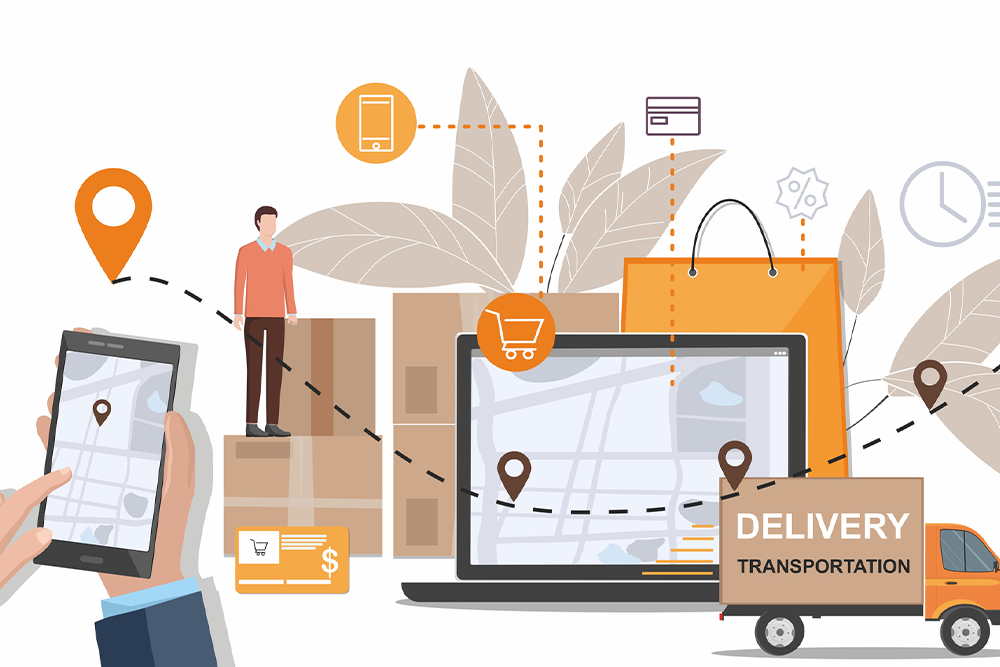
The “Where is My Order?” problem often stems from the uncertainty of the “last mile.” By providing a live tracking link, businesses offer customers the same real-time map view that dispatchers use. When a customer can see the delivery vehicle moving toward their neighborhood in real-time, the urge to call for an update vanishes.
Spot bottlenecks before they become shutdowns with end-to-end supply chain visibility.
Predict and Prevent Delays2. Automated Milestone Notifications
True visibility isn’t just about a map; it’s about communication. SCV software automates notifications at every critical touchpoint:
- Order Confirmed: Setting the expectation.
- Out for Delivery: Providing a specific time window (e.g., “between 1:00 PM and 3:00 PM”).
- The “Next Stop” Alert: A final SMS when the driver is minutes away.
3. Reducing “Total Resolution Time”
Even when a customer does call, visibility software drastically shortens the conversation. Without an integrated platform, a support agent might spend several minutes navigating different systems or calling a driver to find an answer. With a unified dashboard, the agent has the answer in seconds. This efficiency is a core reason why companies see a 20% reduction in support time—it’s a combination of fewer calls and faster answers.
Every self-service interaction is a “saved” support ticket. By providing transparency upfront, you empower the customer and protect your team’s most valuable resource: time.
Proactive Exception Management: Solving Problems Before They Become Calls
In a perfect world, every delivery would arrive exactly on time. In reality, traffic jams happen, weather shifts, and trucks break down. These “exceptions” are the leading cause of high-stress support inquiries.
Supply chain visibility software changes the dynamic from damage control to proactive management.
Turning a Negative into a Positive
When a delivery is delayed, the support burden usually follows a predictable pattern: the customer waits, gets frustrated, and eventually calls to complain. By the time the agent answers, they are dealing with an unhappy customer.
With proactive visibility, the software detects a delay automatically (e.g., the truck hasn’t moved for 20 minutes due to an accident). The system can then:
- Trigger an Instant Update: Automatically send an SMS to the customer: “We’ve hit some unexpected traffic. Your new delivery window is 3:30 PM – 4:00 PM.”
- Set New Expectations: By providing this info before the customer has to ask, you eliminate the need for the call entirely.
- Prioritize High-Value Shipments: Dashboards highlight “at-risk” deliveries in red, allowing your team to focus on fixing the issue rather than just explaining it.
Data-Driven Resolution
When an “exception” occurs, such as a missed delivery or a damaged item, visibility software provides an immediate digital trail. Through Electronic Proof of Delivery (ePOD), agents can instantly view photos of where a package was left or a digital signature from the recipient.
Instead of an agent spending 15 minutes investigating “Where did the driver leave the box?”, they can see the photo in the system and resolve the customer’s query in under 60 seconds. This speed is the engine behind that 20% reduction in support time.
Give your drivers better routes and get 15% more stops out of every single shift. Optimize My Daily RoutesThe Internal Ripple Effect: Empowering the Support Team
While the external benefits for the customer are obvious, the internal shift is where the 20% reduction in support time truly manifests. Without visibility software, a single “Where is my order?” ticket often initiates a “phone tag” marathon.
Eliminating the Information Silo
Traditionally, the customer support agent is separated from the driver and the warehouse. To answer one question, the agent must:
- Search the ERP for order details.
- Log into a separate carrier portal.
- If information is missing, call the dispatcher.
- The dispatcher then radios or calls the driver.
This “broken telephone” chain can take 10 to 15 minutes per inquiry. Supply chain visibility software creates a Single Source of Truth. When the agent, the dispatcher, and the customer are all looking at the same real-time data, that 15-minute investigation shrinks to a 15-second glance.
Reducing Agent Burnout
High WISMO volumes lead to high agent turnover. By automating the repetitive, “low-value” tracking questions, agents are free to handle complex issues that actually require human empathy and problem-solving. This doesn’t just save time; it improves the quality of every interaction.
By the Numbers: How Visibility Translates to ROI
If you’re wondering how real-time data leads to a 20% reduction in support time, the math usually breaks down across these three areas:
| Feature | Impact on Support Workload | Time Saved |
| Real-Time Tracking Links | Eliminates “check-in” calls from customers. | 30–40% fewer inbound WISMO tickets |
| ePOD (Digital Proof) | Instant access to delivery photos/signatures. | 50% faster dispute resolution |
| Proactive Alerts | Notifies customers of delays before they call. | 15% reduction in “frustration” calls |
The Cost of a Call vs. The Cost of a Click
Industry benchmarks suggest that a single customer service phone call costs a company between $5.00 and $12.00 in labor and overhead. Conversely, an automated tracking update costs fractions of a cent. By migrating 20% of your support volume to self-service visibility, the ROI isn’t just measured in minutes—it’s measured in significant bottom-line savings.
Conclusion: Visibility as a Growth Engine
Ending the “Where is My Order?” problem is no longer a matter of hiring more staff; it’s a matter of deploying better technology. By implementing a solution like nuVizz, businesses stop playing defense with their customer service and start playing offense.
Reducing support time by 20% is just the beginning. The real value lies in the trust you build with your customers. When they know they can rely on you for transparency, they don’t just stop calling—they start coming back.