By 2026, logistics won’t just be about moving goods — it’ll be about moving intelligence. Customers now expect real-time visibility, instant delivery updates, and sustainability tracking from every shipment. The pressure is on logistics managers to meet these expectations while handling driver shortages, shrinking delivery windows, and rising operational costs.
That’s why leading enterprises are turning to next-generation Last Mile Transportation Management Systems (TMS) — intelligent platforms that go beyond basic route planning. A modern Last Mile TMS software leverages AI-driven route optimization, predictive analytics, and automated settlement tools to streamline every step of your logistics operation.
In short, it doesn’t just manage deliveries — it thinks, learns, and adapts to every delivery condition in real time.
Top 7 Last Mile TMS features
As we move into 2026, logistics success will depend on how intelligently you manage the final mile. A well-designed Last Mile Transportation Management System (TMS) is no longer just an operational tool — it’s a strategic enabler that improves delivery visibility, route efficiency, and customer satisfaction.
Let’s explore the top 7 Last Mile TMS features every logistics leader should prioritize in 2026 — the innovations that will define smarter, faster, and more sustainable delivery management in the coming year.
1. Real-Time Route Optimization
Static routes are a thing of the past. In 2026, logistics agility is defined by how fast your system adapts — not how well it plans ahead. That’s where AI-powered dynamic route optimization in a Last Mile TMS makes the biggest impact.
Modern route optimization software continuously analyzes live data to create the most efficient delivery paths — automatically recalculating routes in real time based on:
- Traffic conditions and road closures
- Delivery time windows and service-level commitments
- Customer priority or delivery sequence
- Vehicle capacity and driver availability
By adapting to these constantly changing variables, a smart TMS route optimization engine helps logistics managers:
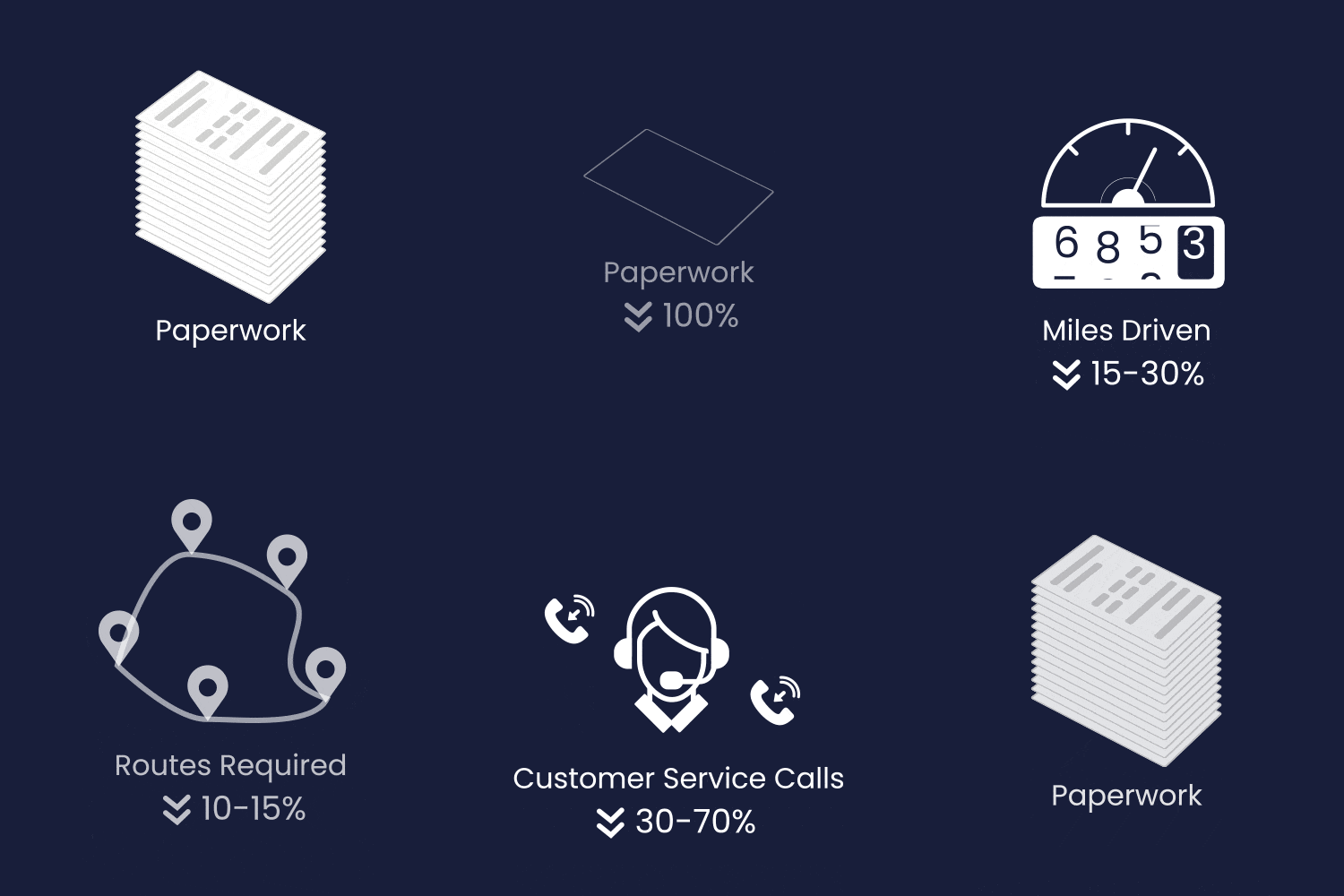
- Improve on-time delivery rates by up to 30%
- Reduce fuel consumption and mileage
- Increase fleet utilization and driver productivity
- Cut down manual dispatching errors
In short, real-time route optimization turns unpredictability into efficiency — ensuring every mile adds value instead of cost.
Gain clarity across every stage of your supply chain and eliminate delivery blind spots.
Improve Visibility Today2. Predictive ETA and Real-Time Visibility
In 2026, customers expect Amazon-level transparency — and anything less feels outdated. They want to know exactly where their package is and when it will arrive, with real-time updates at every stage.
That’s why leading logistics providers rely on predictive ETA and real-time visibility powered by an advanced Last Mile TMS platform. By combining GPS data, IoT sensors, and AI-driven predictive analytics, the system can deliver:
- Accurate, continuously updated ETAs based on live conditions
- Real-time driver and vehicle tracking across all routes
- Automated delay alerts for proactive communication
- Smart rescheduling suggestions to recover from disruptions
This level of visibility helps logistics managers identify potential delays before they occur, keeping operations agile and customers informed.
According to Gartner, companies using predictive visibility solutions have reduced missed delivery SLAs by up to 35% — proving that transparency isn’t just a customer demand; it’s a measurable performance driver.
With a predictive TMS, you don’t just react to problems — you prevent them.
3. AI-Powered Dispatch Automation
Manual dispatching is quickly becoming a thing of the past. By 2026, logistics operations will rely on AI-powered dispatch automation to intelligently assign delivery tasks — no spreadsheets, no guesswork, no delays.
A next-generation Last Mile TMS software automatically matches orders to drivers using real-time data on:
- Driver proximity and current route progress
- Performance history and delivery accuracy
- Workload balancing to prevent over-assignments
With AI-based dispatch automation, logistics teams can:
- Eliminate manual errors in driver assignment
- Optimize workloads dynamically across fleets
- Achieve up to 25% faster dispatching and turnaround times
- Free up managers to focus on customer experience and strategic planning rather than daily task juggling
In short, AI dispatch automation transforms dispatching from a reactive process into a predictive, self-learning operation — helping fleets deliver faster, smarter, and more profitably.
4. Integrated Billing & Settlement Automation
Billing delays and payment disputes have long plagued logistics operations. In 2026, the smartest logistics teams are eliminating these inefficiencies with integrated billing and settlement automation built directly into their Last Mile TMS platform.
This advanced capability combines automated invoice generation, digital proof of delivery (ePOD), and real-time settlement reconciliation — ensuring accuracy and transparency across every financial transaction.
With automated TMS billing and settlement, companies can:
- Trigger instant invoicing right after delivery confirmation
- Apply transparent rate structures based on service type, zone, or distance
- Ensure error-free reconciliation between shippers, carriers, and 3PL partners
- Reduce administrative overhead and manual accounting effort
By merging financial workflows with logistics operations, this feature turns what was once a back-office function into a strategic revenue engine — enhancing cash flow, audit readiness, and partner trust.
5. Customer Communication & Delivery Alerts
The last mile isn’t just about logistics — it’s about customer experience. In 2026, real-time communication has become a key differentiator between an ordinary delivery and a memorable one. That’s why modern Last Mile TMS platforms now come equipped with built-in customer communication and delivery alert systems to keep end-users informed every step of the way.
Leading logistics teams use automated customer notification tools to provide:
- SMS and email alerts for pickup, transit, and delivery milestones
- Live delivery tracking links with real-time status updates
- Instant feedback collection after successful delivery
This proactive communication approach helps logistics managers reduce “Where is my order?” inquiries, improve transparency, and strengthen brand trust.
In fact, companies leveraging AI-driven customer delivery notifications report:
- A 30–40% boost in Net Promoter Scores (NPS)
- A significant drop in customer support calls and delivery disputes
When customers feel informed, they feel in control — and that’s the foundation of loyalty in the last mile.
6. Advanced Analytics & Sustainability Metrics
Sustainability is no longer optional — it’s operational. By 2026, every logistics manager is expected to balance profitability with responsibility. The most effective way to do that is through data-driven sustainability insights built directly into your Last Mile TMS dashboards.
With AI-powered analytics and green logistics reporting, companies can monitor and improve delivery performance while meeting sustainability goals.
A modern transportation management system tracks key performance metrics such as:
- Carbon footprint per delivery and CO₂ reduction trends
- Fuel efficiency averages across routes and vehicles
- Route cost and profitability analysis for every mile
- On-time delivery and SLA performance in real time
These insights empower logistics teams to make smarter, faster, and greener decisions — optimizing route plans to reduce fuel use, lower emissions, and maintain service reliability.
By connecting sustainability analytics with operational KPIs, logistics leaders can align corporate ESG goals with measurable business outcomes — all from a single, intelligent dashboard.
7. Cloud Scalability & Multi-Enterprise Collaboration
The future of logistics is cloud-driven, connected, and collaborative. In 2026, logistics leaders need more than isolated systems — they need cloud-based Last Mile TMS platforms that enable real-time collaboration between shippers, carriers, 3PLs, and delivery partners.
A scalable transportation management system empowers your organization to securely share data, routes, and performance updates across multiple stakeholders — all from a single, unified platform.
With cloud scalability and multi-enterprise collaboration, logistics networks can:
- Onboard new partners and carriers faster without IT bottlenecks
- Scale operations across regions and geographies effortlessly
- Ensure 24/7 uptime and real-time system access for distributed teams
- Maintain enterprise-grade data security and access controls
This collaborative architecture lays the foundation for multi-enterprise logistics ecosystems, where every participant benefits from shared intelligence, transparency, and network-wide optimization.
In short, cloud scalability turns your TMS into a connected ecosystem — not just a tool, but a growth enabler for the entire logistics value chain.
Scale delivery operations without increasing fleet or labor. Streamline Dispatch Workflows
How to Choose the Right Last Mile TMS for 2026
Selecting the right Last Mile Transportation Management System (TMS) in 2026 goes beyond comparing features — it’s about choosing a platform that will evolve with your business. The ideal TMS combines AI-driven automation, seamless integration, and cloud scalability to deliver lasting operational value.
When evaluating your options, ask:
- Does it leverage AI and automation for route planning, dispatching, and optimization?
- Can it integrate seamlessly with your existing ERP, WMS, or CRM systems?
- Does it provide end-to-end visibility for both customers and managers?
- Is it cloud-native and scalable to handle multi-enterprise growth?
- Can it generate actionable analytics for faster, smarter decision-making?
Choosing the best Last Mile TMS software means finding one that not only manages transportation tasks but also transforms your logistics operations into a strategic, data-driven advantage.
With the right TMS in place, your organization can achieve real-time visibility, predictive efficiency, and sustainable growth — all essential to staying ahead in 2026 and beyond.
nuVizz: Redefining Last Mile TMS for 2026
At nuVizz, we’ve already built what 2026 logistics demands — today. Our AI-powered Last Mile TMS platform enables logistics leaders worldwide to transform delivery operations with intelligence, automation, and visibility.
With nuVizz, logistics teams can:
- Optimize routes in real time with predictive AI algorithms
- Gain complete visibility across every stage of the supply chain
- Automate dispatch, billing, and settlements for seamless operations
- Track sustainability insights through advanced analytics dashboards
Whether you manage food logistics, healthcare deliveries, or B2B distribution, nuVizz helps enterprises move smarter, faster, and greener — powered by innovation and real-time intelligence.
Discover how nuVizz can future-proof your logistics.
Explore Last Mile TMS SolutionsConclusion
As we move into 2026 and beyond, the difference between logistics leaders and laggards will come down to one critical factor — how intelligently they leverage their Transportation Management System (TMS).
The right Last Mile TMS software isn’t just another logistics tool; it’s an intelligent, connected platform that drives accuracy, agility, and growth through automation and data-driven decision-making.
At nuVizz, we’re redefining what next-generation logistics looks like — helping enterprises see, decide, and deliver better than ever before. With AI, predictive analytics, and real-time visibility built into every mile, nuVizz empowers logistics managers to stay ahead of change, not chase it.
Because the future of logistics isn’t about moving goods — it’s about moving intelligence.